Skip navigation

Tag Archives: current-events


The GOP Then!

HEATHER COX RICHARDSON

AUG 7, 2023

On August 6, 1880, Republican presidential candidate James A. Garfield gave one of his most famous speeches. Then a congressional representative from Ohio, Garfield was in New York City to make peace with Roscoe Conkling, a Republican kingmaker who hated him and his insistence on clean government.

In the evening, Garfield spoke to a crowd of well-wishers, made up in large part of men who had fought in the Civil War, as Garfield had. The one-time college professor spoke directly to the “Boys in Blue,” telling them “how great a thing it is to live in this Union and be a part of it.” He told them that they, the soldiers of the Civil War, represented the same ideas of union embraced by the men who framed the Constitution.

“Gentlemen,” said Garfield to great applause, “ideas outlive men; ideas outlive all earthly things. You who fought in the war for the Union fought for immortal ideas, and by their might you crowned the war with victory. But victory was worth nothing except for the truths that were under it, in it, and above it. We meet to-night as comrades to stand guard around the sacred truths for which we fought. And while we have life to meet and grasp the hand of a comrade, we will stand by the great truths of the war.”

In 1880, four years after unreconstructed southern Democrats had taken control of all the former Confederate states and cemented the process of taking the vote away from Black men, Garfield promised that “we will remember our allies who fought with us.” He explained: “Soon after the great struggle began, we looked behind the army of white rebels, and saw 4,000,000 of black people condemned to toil as slaves for our enemies; and we found that the hearts of these 4,000,000 were God-inspired with the spirit of liberty, and that they were all our friends.”

As the crowd applauded, he continued: “We have seen white men betray the flag and fight to kill the Union; but in all that long, dreary war we never saw a traitor in a black skin.” To great cheers, he went on: “Our comrades escaping from the starvation of prison, fleeing to our lines by the light of the North star, never feared to enter the black man’s cabin and ask for bread.” “That’s so!” yelled a man in the crowd. “In all that period of suffering and danger, no Union soldier was ever betrayed by a black man or woman.”

“[S]o long as we live we will stand by these black allies,” Garfield said. “We will stand by them until the sun of liberty, fixed in the firmament of our Constitution, shall shine with equal ray upon every man, black or white, throughout the Union. Fellow-citizens, fellow-soldiers, in this there is the beneficence of eternal justice, and by it we will stand forever….” To wild cheers, Garfield concluded: “[T]he Republic rises on the glorious achievements of its dead and living heroes to a higher and nobler national life. We must stand guard over our past as soldiers, and over our country as the common heritage of all.”

In an era in which the smart money said the Democrats, with their promise to overturn the Reconstruction laws that established a legal framework for racial equality, would win the 1880 election, Garfield squeaked into the White House.

But he did not live long enough to put his vision into law. After his death, the Republican Party slid away from the protection of equal rights, focusing instead on protecting big business, its leaders looking the other way as state laws increasingly kept Black Americans and immigrants from voting so long as that same focus on state power prevented national regulation of business.

But those who believed in civil rights never gave up. In 1909 the National Association for the Advancement of Colored People (NAACP) organized “to promote equality of rights and eradicate caste or race prejudice among citizens of the United States,” and worked to secure “complete equality before the law,” including voting rights.

NAACP members publicized racial atrocities and insisted that authorities enforce the laws already on the books. By the 1960s, those protecting Black rights ramped up their efforts to register voters and to organize communities to support political change. When voter registration workers disappeared during the “Freedom Summer” of 1964, popular anger at their disappearance gave Democratic president Lyndon Baines Johnson leverage to pressure Congress to act. It passed the Civil Rights Act of 1964, in part to make it easier to vote.

After voters put Johnson back into the White House in November 1964, voting rights activists stepped up their efforts. In Selma, Alabama, where the voting rolls were 99% white even though Black Americans outnumbered white Americans, law enforcement officers harassed activists. After officers beat and shot an unarmed man marching for voting rights in a town near Selma, Black leaders planned a march from Selma to the state capitol at Montgomery to draw attention to voter suppression.

Law enforcement officers met the protesters on March 7, 1965, with billy clubs, bullwhips, and tear gas. On March 15, Johnson addressed a national televised joint session of Congress to ask it to pass a national voting rights act. “Our fathers believed that if [their] noble view of the rights of man was to flourish, it must be rooted in democracy,” he said. “The most basic right of all was the right to choose your own leaders. The history of this country, in large measure, is the history of the expansion of that right to all of our people.”

He submitted to Congress voting rights legislation, and Congress delivered.

On August 6, 1965, Johnson signed the Voting Rights Act to guarantee Black Americans the right to vote.

“Today is a triumph for freedom as huge as any victory that has ever been won on any battlefield,” Johnson told the American people in a televised joint session of Congress. The Civil War had promised equality to all Americans, but that promise had not been fulfilled. “Today is a towering and certain mark that, in this generation, that promise will be kept.”

“I pledge you that we will not delay, or we will not hesitate, or we will not turn aside until Americans of every race and color and origin in this country have the same right as all others to share in the process of democracy,” Johnson said.

That resolve did not hold. In the 2013 Shelby County v. Holder decision, the Supreme Court significantly weakened the Voting Rights Act. Republican-dominated states immediately found ways to keep minority voters from the polls and their votes from being counted, and in 2020, then-president Trump tried to throw out the votes of people in majority Black districts in order to overturn the results of that year’s presidential election. On July 10, 2023, House Republicans introduced a sweeping “election integrity” bill that would loosen campaign finance regulations and make it harder to vote.

Eight days later, on July 18, Democrats in the House and Senate reintroduced the Freedom to Vote Act, which would make it easier for all Americans to vote, end partisan gerrymandering, require transparency in campaign donations to try to limit dark money in elections, and protect state and local election officials. “The story of American democracy is one of a relentless march towards further equality,” said Senate majority leader Chuck Schumer (D-NY). “The Freedom To Vote Act would rectify one of the great historic harms of our past and put us closer to our goal of a fully representative democracy.”

And then, on August 1—last Tuesday—the Department of Justice charged Trump under laws Congress passed during Reconstruction to protect the Black Americans’ political rights. Trump is charged with conspiring to obstruct an official proceeding—violating a law passed to stop Ku Klux Klan terrorists from breaking up official meetings in the late 1860s—and obstructing that proceeding: the counting of electoral votes.

Trump is also charged with conspiring “to injure, oppress, threaten, and intimidate one or more persons in the free exercise and enjoyment of a right and privilege secured to them by the Constitution and laws of the United States—that is, the right to vote, and to have one’s vote counted.”

Notes:

https://millercenter.org/the-presidency/presidential-speeches/august-6-1965-remarks-signing-voting-rights-act

https://www.klobuchar.senate.gov/public/index.cfm/news-releases?ID=DCA59415-4DFA-4D55-B5E7-392B81285BD3

https://www.loc.gov/exhibits/naacp/founding-and-early-years.html

https://www.presidency.ucsb.edu/documents/special-message-the-congress-the-american-promise


Upgrade to paid

What Constitutes “National Security?”

The need for a broader definition

DAN RATHER

 AND 

ELLIOT KIRSCHNER

MAY 26, 2023

What constitutes “national security?” 

It’s not meant to be a trick question, but it is one that perhaps needs to be rethought for our modern world. 

This has become all the more apparent as the White House and House Speaker Kevin McCarthy work on a possible deal to avert a United States debt default. We wrote earlier why this is not really a “negotiation” (more like a hostage crisis), but if legislation emerges (still in doubt at the time of this writing), it’s going to contain spending caps. 

Everyone has already taken Social Security and Medicare off the table, so that leaves so-called discretionary spending, which can be divided into two buckets: the defense budget and everything else. 

The Republican viewpoint is that defense spending should remain unaffected while deep cuts are made in the “everything else” category. The Biden administration, which actually asked for more money for defense in its budget, still wants to protect as much of “everything else” as possible. 

Republicans make the point that we live in a dangerous world, with rising threats from China, Russia, Iran, North Korea, and others. This is true. And they argue that cuts to the defense department could harm “national security.”

Senate Republican Whip John Thune of South Dakota recently told The Hill, “Once they do the caps, the big fights in the appropriations process will be how money gets prioritized and allocated. For sure, the Republican priority is going to be national security” (emphasis ours). 

The phrase “national security” is often used as a synonym for the military and related functions intended to curb threats from abroad. The Department of Defense website says the agency “provides the military forces needed to deter war and ensure our nation’s security.” The CIA says on its website homepage that “the work we do … is vital to U.S. national security.” Then there’s the Department of Homeland Security, which basically has a synonym of “national security” in its very name. And of course the National Security Agency itself.

But if we were to define “national security” in more holistic terms as the general safety and security of the United States and its people, perhaps we should see it through a much wider aperture. The State Department is vital for our national security. So is our investment in science, the health of our children, education, our infrastructure, mitigating the dangers from the climate crisis, and on and on. 

Many Democrats are making a version of this point. “There are a lot of federal agencies that contribute directly or indirectly to national security,” said Senate Armed Services Committee Chairman Jack Reed of Rhode Island in the same article from The Hill. “They’re trying to set up a zero-sum game: defense wins, domestic loses. But it doesn’t make sense because national security embraces so many different agencies.” 

While this argument is more expansive than the Republican talking points, it’s still too rooted in Washington-speak about agencies and budgets. Yes, those are currently in the crosshairs. But there is a much broader narrative that could resonate with the public to reframe the debate more permanently and may be particularly appealing for younger voters. 

For those raised during the Cold War and with memories of World War II still recent, national security could be readily envisioned in tangible military assets like aircraft carriers, missile systems, and standing armies. 

These still remain necessary aspects of the defense of the homeland and our global interests (while recognizing that the defense budget is prone to bloat and even corruption, as we did in this previous Steady piece). 

At the same time, what about national security in an age of a pandemic? Rising sea levels? And artificial intelligence? 

There are some who argue that we don’t need a strong military or that we can slash the defense budget by large percentages. But these are not mainstream positions or likely to happen. Much more concerning are those who still view national security through the antiquated lens of the 20th century. 

And recently, it’s gotten even worse. In fact, many elected officials who rage about the prospect of cuts to defense spending support actual measures that undermine our national security. 

Allowing weapons of war on our streets while obstructing commonsense gun laws undermines our national security, an effect we can measure in thousands of lost lives and the terror and trauma of mass shootings. 

Attacking marginalized groups also undermines our national security because we are weakened by division.

Promoting the “Big Lie” about stolen elections threatens our national security because it undermines our democracy. 

Banning books threatens our national security because we need a citizenry of informed critical thinkers. 

Our adversaries measure our vulnerabilities not only via our troop deployments and fighter jets. They see our political extremism, our animosities, our anger, and our selfishness and seek to exploit them. 

And frankly, they see a faction willing to blow up our economy by threatening to default on the debt unless they get their way. Talk about a threat to national security.


HEATHER COX RICHARDSON

JUN 1, 2023

Tonight the House passed a bill to suspend the debt ceiling for two years, enabling the Treasury to borrow money to prevent a default. More Democrats than Republicans rallied to the measure, with 165 Democrats and 149 Republicans voting in favor, for a final vote of 314 to 117. Seventy-one Republicans and 46 Democrats opposed the bill. Now the measure heads to the Senate.

The votes revealed a bitter divide in the Republican Party, as the far-right House Freedom Caucus fervently opposed the measure; Representative Chip Roy (R-TX) for example, called it a “turd sandwich.” Florida governor Ron DeSantis also came out against it, saying it leaves the country “careening toward bankruptcy.”

The far right insists the measure does not provide the cuts they demand. Last night’s nonpartisan Congressional Budget Office scoring of the bill offered them ammunition when it said that the additional work requirement imposed on able-bodied people aged 18–54 without dependents to receive food benefits is outweighed by the expansion of those benefits to veterans, unhoused people, and children aging out of foster care. The CBO estimates that the measure will add 78,000 people a month to food assistance programs, adding $2.1 billion in spending over the next ten years.

Despite their fury, though, the far right in the House appears to be backing down from challenging Representative Kevin McCarthy’s (R-CA) speakership. Their angry news conferences seem mostly to be performances for their base, and to answer them, McCarthy today said on the Fox News Channel that he was creating a “commission” to “look at” cutting the budget that the president “walled off” from cuts, including the mandatory spending on Medicare and Social Security.

But, as Josh Marshall pointed out in Talking Points Memo today, the Republican base no longer seems to care much about fiscal issues. Instead, they are pushing the cultural issues at the heart of illiberal democracy: anti-LGBTQ laws, antiabortion laws, anti-immigration laws.

Former president Trump is making those themes central to his reelection campaign. Yesterday he released a video promising that on “Day One” of a new presidential term, he would issue an executive order that would end birthright citizenship. Our current policy that anyone born in the United States is a citizen, he claims, is “based on a historical myth, and a willful misinterpretation of the law by the open borders advocates.” He promises to make “clear to federal agencies that under the correct interpretation of the law, going forward, the future children of illegal aliens will not receive automatic US citizenship.”

Trump is picking up an idea from his presidential term that immigrants are flocking to the U.S. as “birth tourists” so their children will have dual citizenship, but the estimate from the immigration-restrictionist Center for Immigration Studies that birth tourism accounts for 26,000 of the approximately 3.7 million births in the U.S. each year has been shown to be wildly high. Trump’s attack on birthright citizenship is an attack on immigration itself, echoing people like Hungary’s prime minister, Viktor Orbán, who insists that immigration weakens a nation by diluting its native-born people with outsiders.

Trump’s attack on the idea of birthright citizenship as a “historical myth” is a perversion of our history. It matters. In the nineteenth century, the United States enshrined in its fundamental law the idea that there would not be different levels of citizenship in this country. Although not honored in practice, that idea, and its place in the law, gave those excluded from it the language and the tools to fight for equality. Over time, they have increasingly expanded those included in it.

The Republican Party organized in the 1850s to fight the idea that there should be different classes of Americans based on race—not only Black Americans, but also Irish, Chinese, Mexican, and Indigenous Americans faced discriminatory state laws. Republicans stated explicitly in their 1860 platform that they were “opposed to any change in our naturalization laws or any state legislation by which the rights of citizens hitherto accorded to immigrants from foreign lands shall be abridged or impaired; and in favor of giving a full and efficient protection to the rights of all classes of citizens, whether native or naturalized, both at home and abroad.”

In 1868, after the Civil War had ended the legal system of human enslavement, the American people added to the Constitution the Fourteenth Amendment, whose very first sentence reads: “All persons born or naturalized in the United States, and subject to the jurisdiction thereof, are citizens of the United States and of the State wherein they reside.” Congress wrote that sentence to overturn the 1857 Dred Scott v. Sandford decision, in which the Supreme Court ruled that people of African descent “are not included, and were not intended to be included, under the word ‘citizens’ in the Constitution, and can therefore claim none of the rights and privileges which that instrument provides for and secures to citizens of the United States.”

The Fourteenth Amendment legally made Black men citizens equal to white men.

But did it include the children of immigrants? In 1882, during a period of racist hysteria, the Chinese Exclusion Act declared that Chinese immigrants could not become citizens. But what about their children who were born in the United States?

Wong Kim Ark was born around 1873, the child of Chinese parents who were merchants in San Francisco. In 1889 he traveled with his parents when they repatriated to China, where he married. He then returned to the U.S., leaving his wife behind, and was readmitted. After another trip to China in 1894, though, customs officials denied him reentry to the U.S. in 1895, claiming he was a Chinese subject because his parents were Chinese.

Wong sued, and his lawsuit was the first to climb all the way to the U.S. Supreme Court, thanks to the government’s recognition that with the U.S. in the middle of an immigration boom, the question of birthright citizenship must be addressed. In the 1898 U.S. v. Wong Kim Ark decision, the court held by a vote of 6–2 that Wong was a citizen because he was born in the United States.

That decision has stood ever since, as a majority of Americans have recognized the principle behind the citizenship clause of the Fourteenth Amendment as the one central to the United States: “that all men are created equal” and that a nation based on that idea draws strength from all of its people. Over time, we have expanded our definition of who is included in that equality.

Now the right wing is trying to contract equality again, excluding many of us from its rights and duties. The Dobbs v. Jackson Women’s Health decision makes women a separate and lesser class of citizen; anti-LGBTQ legislation denigrates sexual minorities. Trump’s attack on birthright citizenship makes that attack on equality explicit, calling equality a “myth” and attempting to enshrine inequality as the only real theme of our history.

The concept of equality means we all have equal rights. It also means we all owe an equal allegiance to the country and that we all should be equal before the law, principles the former president has reason to dislike.

Today, Katelyn Polantz, Paula Reid, and Kaitlan Collins of CNN broke the story that federal prosecutors have an audio recording of the former president admitting he kept a classified Pentagon document about a potential attack on Iran. The material on the tape, which was recorded at his Bedminster, New Jersey, property and appears to indicate that the document was in his hands, shows that Trump understood he had taken a classified document and that he understood that there were limits to his ability to declassify records.

The recording also appears to suggest that at least one of the documents Trump took when he left office had enormous monetary value. As former Senior Foreign Service member Luis Moreno tweeted: “You can bet that if the TS/SCI dox involved military action against Iran, there would be a couple of countries willing to pay a king’s ransom for it.”

Notes:

https://www.cnn.com/2023/05/31/politics/work-requirements-debt-ceiling-cbo/index.html

https://www.washingtonpost.com/politics/2023/05/31/mccarthys-critics-shy-away-threat-oust-him/

https://www.politico.com/news/2023/05/29/desantis-debt-limit-deal-00099155

https://talkingpointsmemo.com/edblog/the-diehards-fold

https://www.reuters.com/article/us-usa-immigration-trump/trump-administration-rolls-out-new-rule-to-limit-birth-tourism-idUSKBN1ZM2G1

https://www.thedailybeast.com/russians-flock-to-trump-properties-to-give-birth-to-us-citizens

https://www.cdc.gov/nchs/fastats/births.htm

https://www.archives.gov/milestone-documents/chinese-exclusion-act

https://www.presidency.ucsb.edu/documents/republican-party-platform-1860

https://www.cnn.com/2023/05/31/politics/trump-tape-classified-document-iran-milley/index.html

Sean Hannity Staff, “MAGA PROMISE: Trump Vows to End Birthright Citizenship on Day One [WATCH]” at hannity DOT com, May 30, 2023.

https://www.archives.gov/milestone-documents/dred-scott-v-sandford

https://www.law.cornell.edu/supremecourt/text/169/649


COMMENCEMENT ADDRESS

“After the 2020 election and the attack of January 6th, my fellow Republicans wanted me to lie. They wanted me to say that the 2020 election was stolen, that the attack of January 6th wasn’t a big deal, and that Donald Trump wasn’t dangerous. I had to choose between lying and losing my position in House leadership. America cannot remain a free nation if we abandon the truth. So as you go out to change the world, resolve that you will stand in truth. Those who are trying to unravel the foundations of our republic, who are threatening the rule of law and the sanctity of our elections, know they can’t succeed if you vote. So Class of 2023, get out and vote. This means listening and learning, including – especially – from those with whom we disagree. This means running for office.  We need you to work to defend our Constitution and defeat those who deny the sanctity of our elections.  We are entrusting our nation – and the future of freedom – to your care.”


Plus: The Corruption of Lindsey Graham, a new e-book from The Bulwark

JOE PERTICONE

MAY 9, 2023

Good afternoon and welcome to Press Pass. There are two important items in today’s edition. First, my Bulwark colleague Will Saletan has just published a powerful, deeply researched, book-length project about Lindsey Graham’s descent into MAGA corruption following the rise of Donald Trump. It’s really a story about how authoritarianism grows within a liberal democracy like ours, and I encourage you to set aside a few hours to give it the attention it deserves. It’s available to read at TheBulwark.com/LindseyGraham but also via a PDF and Kindle edition.  I’ll say more about that below. 

But we’ll start off today with the peculiar case of a group of American lawmakers whose travels abroad included a meeting with an infamous right-wing demagogue. I wrote in January about the recent Republican love affair with Italian populist ultra-conservatives like Prime Minister Giorgia Meloni, who was elected as part of a far-right coalition that swept into power in the country’s September elections. Last week, traveling American lawmakers met with one member of this Italian political movement whose CV is extreme enough that taking the meeting amounted to an act of recklessness on the Americans’ part.

Subscribe to Press Pass. In your inbox every Tuesday and Thursday.

Join

Credit: Office of Speaker Kevin McCarthy

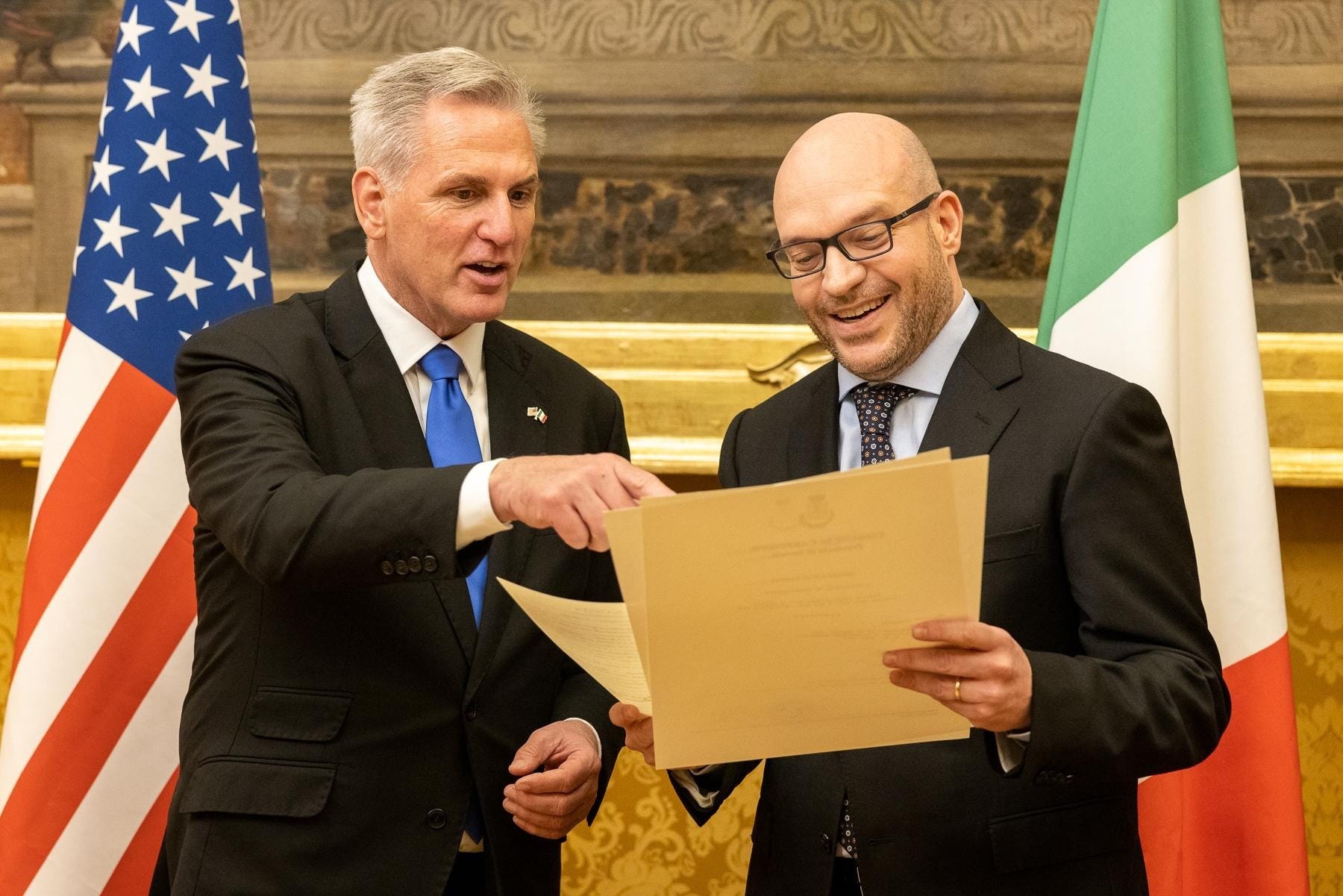
Speaker Kevin McCarthy and a group of his fellow lawmakers met with a range of elected officials and important people during their recent two-week international congressional delegation, which included stops in Egypt, Israel, and Jordan. During a final leg in Italy last week, McCarthy and co. met with Pope Francis and Prime Minister Meloni.

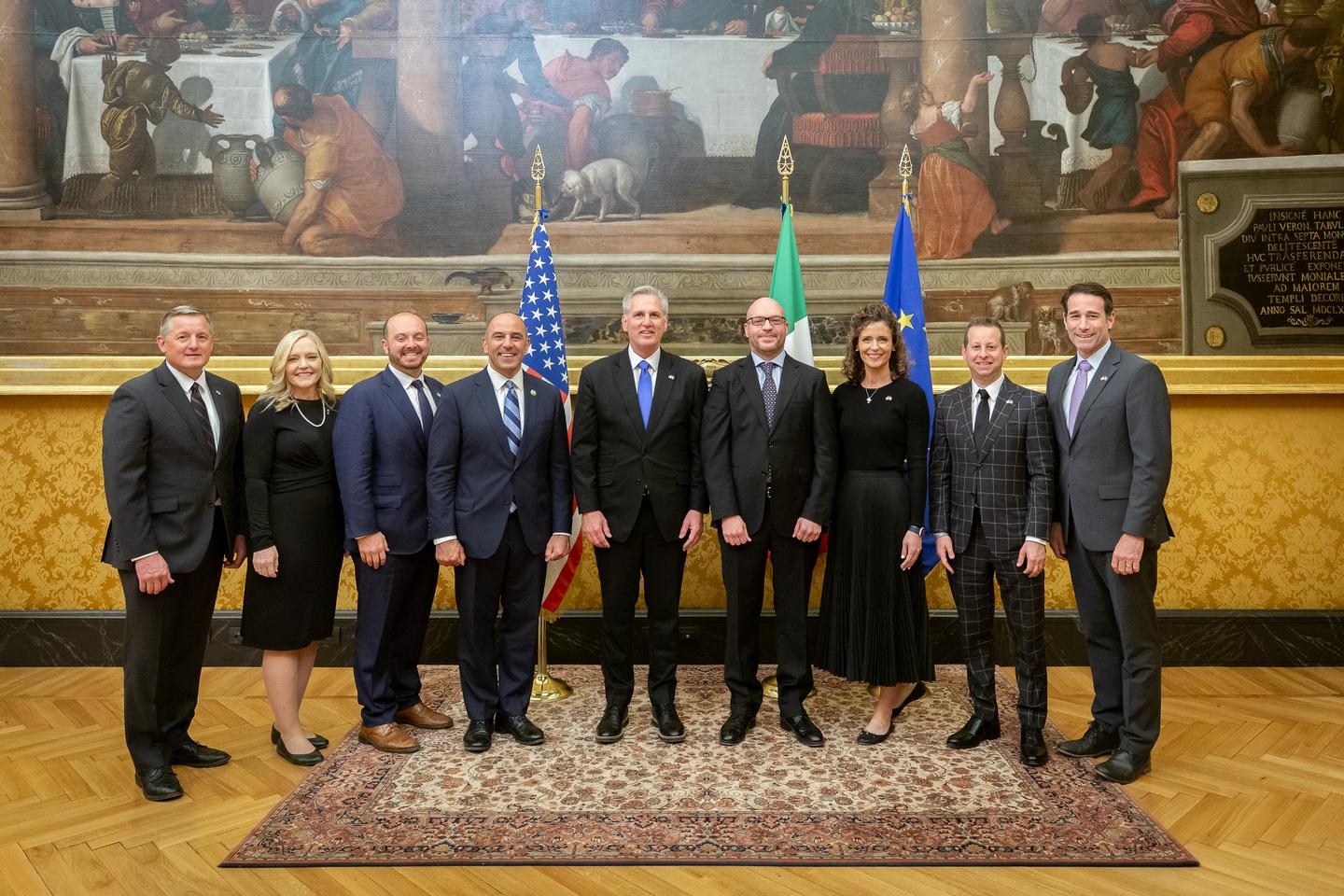
But one of the other individuals the delegation met with in Italy was a man named Lorenzo Fontana. Fontana serves as the president of the Chamber of Deputies, which means that, as the speaker of Italy’s lower legislative house, he is McCarthy’s counterpart in Italian government. Fontana led McCarthy into the legislative chamber to raucous applause, and he also gave the speaker a gift: a copy of McCarthy’s grandfather’s original birth certificate. The whole of the American group—which included two Democrats, Reps. Jimmy Panetta of California (son of Leon Panetta, the former defense secretary who once held the same seat in Congress) and Jared Moskowitz of Florida—posed for a photo with Fontana. 

While meetings with a variety of international politicians made up the core of the congressional delegation’s itinerary, Fontana is different from other figures the Americans met during the trip. To be sure, he shares some beliefs in common with Prime Minister Meloni: Like her, he is an ultra-conservative who advocates the priority of the family, the upholding of tradition, the virtues of nationalism, and the importance of strict immigration policies.

What makes Fontana different from Meloni is that his right-wing populism goes far, far beyond hers. His views have pushed him to support some of the worst and most dangerous people across Europe, and he has also carved out a lane as one Italy’s leading homophobes.

Fontana is a member of Lega (the League), Italy’s very far-right party that formed a coalition with Meloni’s Fratelli d’Italia (Brothers of Italy) last year to win the fall election. While it’s understandable that an American Republican might see conservative groups abroad as fundamentally similar to the GOP, Lega is simply not comparable to the Republican party. If it were operating in the United States, Lega would represent just a sliver of the larger GOP, a faction to the right of the Freedom Caucus whose median member would be someone like Paul Gosar, and whose still-further-right wing might be represented by someone like Richard Spencer.

Here are some highlights from Fontana’s career:

  • He has embraced Golden Dawn, a Greek political party and neo-nazi group.
  • He called Vladimir Putin “a light for us Westerners, who live in a great crisis of values.”
  • During the 2014 Russian invasion of Crimea, he wore a “no to Russian sanctions” shirt. He was later invited to participate as an “election observer” in Crimea as part of Russia’s propaganda campaign justifying the invasion.
  • As the Minister for Families, Fontana fought to restrict adoption and surrogacy for gay couples. He has also said same-sex parents “don’t exist.”

To be clear, McCarthy’s meeting and photo-op with Fontana do not amount to an endorsement of the latter’s views. And yes, the protocols and niceties of diplomacy hold that officials usually meet with their counterparts when traveling abroad. But those protocols are not set in stone. And for McCarthy to meet with Fontana in this way was an act of carelessness, given the way these meetings are advertised to the public. Fontana’s profile will certainly be elevated by pictures of him welcoming an American congressional delegation and presenting a gift to the speaker of the House. Further, Fontana being able to refer to an account of the meeting published on McCarthy’s own official website—where Fontana is mentioned alongside the prime minister and the pope—will do much to further legitimize him as a figure of international standing.

A McCarthy spokesperson did not respond to a request for comment.

Vetting problems seem to be increasingly common for conservative lawmakers; many members of the House Republican Conference have been burned for posing with Proud Boys who were later convicted of sedition, unabashed white supremacists, and more. Of course, it’s possible that these problems might arise from more than simple negligence. Former Rep. Devin Nunes and some of Trump’s children are slated to share a stage with Hitler-praising internet personalities this coming weekend at Trump National Doral resort in Miami. It’s hard to take care to avoid associating with the hateful conspiratorial fringe if you just don’t care that much about it in the first place.

But the highest-ranking elected Republican currently in office should know better and do better, especially considering that during the same trip abroad, he showed that he won’t always take the far-right bait. Then, too, the rest of the international congressional delegation, including Panetta and Moskowtiz, should have had the foresight to have asked their staff to research the officials they met abroad to avoid exactly these problems. (Spokespeople for Panetta and Moskowitz also did not respond to requests for comment.)

Share Press Pass

The Corruption of Lindsey Graham

As I mentioned above, Bulwark writer Will Saletan has just published a remarkable deep dive on Lindsey Graham. Read it and you’ll come away with a clearer understanding of what it looks like when authoritarians corrupt liberal democracies—because you’ll know what it looked like, step by step, when it happened to ours.

Here’s a snapshot:

When an authoritarian rises to power in a democratic country, it can be a shock. But over time, the shock wears off. As the new leader tramples norms and rules, people get used to it. That’s part of what happened to Graham and his colleagues in Trump’s first year. They got used to the president’s behavior. It began to feel normal.

Normalization is corrosive. It numbs you to the authoritarian’s crimes. You stop noticing what’s happening. Or you no longer care. Or you get used to defending the leader’s abuses, as Graham did.

The second stage is more serious. Once the authoritarian’s allies have normalized his behavior, they rally around him just as they would rally around any other leader of their party. And they attack his opponents just as they would if he were a normal president.

Graham’s trajectory over the past eight years brought him very low as he sought power and influence with a leader he once despised, in the process becoming the same kind of demagogue he used to hate. Saletan’s account of this process uses Graham’s story to illustrate the mechanics of emerging authoritarianism. I hope you’ll give the whole thing a read. It is worth every minute you spend on it.

Subscribe to Press Pass

By The Bulwark  ·  Launched 4 months ago

In-depth reporting on Congress, campaigns, and the way Washington works.


May 2, 2023

HEATHER COX RICHARDSON

MAY 3, 2023

The end of the semester is always rough and I’ve had too many long nights, so tonight I am going to offer just one explanation about the debt clause in the Fourteenth Amendment: 

The debt ceiling crisis continues to dominate the news, with some speculation now that White House officials are wondering whether the Fourteenth Amendment to the Constitution might require the government to continue to pay its bills whether Congress actually raises the debt ceiling or not.

The fourth section of the Fourteenth Amendment reads: “The validity of the public debt of the United States, authorized by law, including debts incurred for payment of pensions and bounties for services in suppressing insurrection or rebellion, shall not be questioned.”

This statement was a response to a very specific threat. 

During the Civil War, the U.S. Treasury issued more than $2.5 billion in bonds to pay for the war effort. To make those bonds attractive to investors, Congress had made most of them payable in gold, along with their interest. That gold backing made them highly valuable in an economy plagued by inflation. 

In contrast, most working Americans used the nation’s first national currency, the greenbacks, introduced by Congress in 1862 and so called because they were printed with green ink on the back and black ink on the front—as our money still is; check out a dollar bill. Because greenbacks were backed only by the government’s ability to pay, their value tended to fluctuate. As Congress pumped more and more of them into the economy to pay expenses, inflation made their value decrease. 

National taxes funded the bonds, which meant that workers whose salary was paid in the depreciating greenbacks paid taxes to the government, which in turn paid interest to bondholders in rock-solid gold. After the war, workers noted that inflation meant their real wages had fallen during the war, while war contracts had poured money into the pockets of industrialists. 

Workers couldn’t do much about the war years and still faced years of paying off the wartime bonds. They began to call for repaying war bonds not in gold but in depreciated currency, insisting that taxpayers should not be bled dry for rich bondholders. Democrats, furious at wartime policies that had enriched industrialists and favored bankers, promised voters that if voters put them in control of Congress, they would put this policy into law.

Republican legislators who had created the bonds in the first place were horrified at the idea that Democrats were claiming the right to change the terms under which the debt had been sold. This, they said, was “repudiation” and would turn those who had invested in the United States against it. 

Bonds were about far more than just money. When the war broke out, the Treasury had turned to bankers to underwrite the war. But the bankers were notably reluctant to bet against the cotton-rich South and refused to provide the amount of help necessary. To keep the government afloat, Treasury officers had been forced to turn to ordinary Americans, who for four years had shouldered the financial burden of supporting their government. 

“It is your war,” Treasury Secretary William Pitt Fessenden wrote to the public in 1864. “Much effort has been made to shake public faith in our national credit, both at home and abroad…yet we have asked no foreign aid. Calm and self-reliant, our own means thus far have proved adequate to our wants. They are yet ample to meet those of the present and the future.” 

On April 3, 1865, the day the Confederate capital of Richmond, Virginia, fell, bond salesman Jay Cooke hung from his office window a sign that featured the nicknames of the two most popular bond issues, along with an even larger banner that read:

“The Bravery of our Army

The Valor of our Navy

Sustained by our Treasury

Upon the Faith and 

Substance of

A Patriotic People.”

The debt was a symbol of a newly powerful national government that represented ordinary Americans rather than the elite enslavers who had controlled it before the war. “There has never been a national debt so generously distributed among and held by the masses of the people as all the obligations of the United States,” wrote an Indianapolis newspaper in 1865. “This shows at once the strength of popular institutions, and the confidence the people have in their perpetuity.” 

Undermining the value of U.S. bonds was an attack not just on the value of investments, but on the nation itself. When Republican lawmakers wrote the Fourteenth Amendment in 1866, they recognized that a refusal to meet the nation’s financial obligations would dismantle the government, and they defended the sanctity of the commitments the government had made. When voters ratified that amendment in 1868, they added to the Constitution, our fundamental law, the principle that the obligations of the country “shall not be questioned.”

Notes:


Judge for yourself

ELLIOT KIRSCHNER

 AND 

DAN RATHER

APR 5, 2023

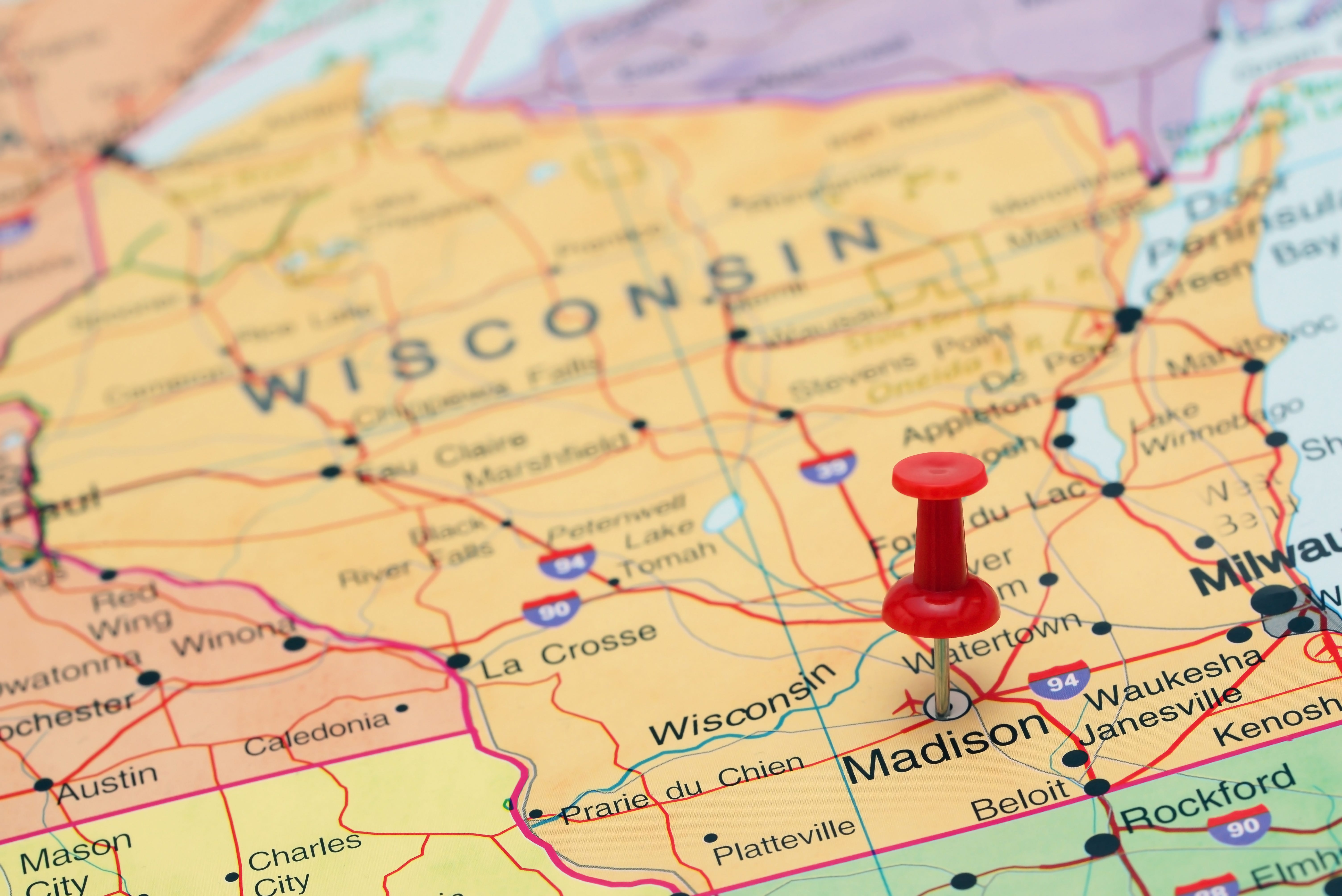
Wisconsin is a state known for its cheese, but now it may also be known for its tea leaves.

You can make a strong case that the biggest political news from yesterday was not the courtroom appearance of a former president in New York, but rather a state supreme court election in the Badger State. 

These are the kinds of races that usually elicit more yawns than a kindergarten class after recess. But not this year. Not in Wisconsin. Not in our current political environment. 

Officially, the race for an open seat on the Wisconsin Supreme Court was a nonpartisan affair. Officially. But there was no secret about where the political affiliations of the two candidates lay. Janet Protasiewicz telegraphed herself as a “progressive,” and her opponent Daniel Kelly is a “conservative.” And with an existing “conservative” justice retiring, the future balance of a court that had been evenly split hinged upon yesterday’s outcome.

This is especially important when you consider that Wisconsin may be the most embattled of battleground states. With the exception of President Obama’s victories in 2008 and 2012, it has been decided by around a point or less in every presidential election from 2000 onward.

In 2022, the Democratic candidate for Senate barely lost to the Republican incumbent. It was a race that many Democrats now believe they let slip away. 

Two places you won’t see evidence of Wisconsin’s battleground status, however, are its state legislature and its congressional delegation. They are both overwhelmingly Republican. And that’s telling. Republicans made the state among the most gerrymandered in the nation. It’s so bad that you might be hard-pressed to call Wisconsin a fully functional democracy.

This was the backdrop for yesterday’s Wisconsin election. And so was the U.S. Supreme Court’s recent dismantling of women’s reproductive rights. Abortion is currently illegal in Wisconsin due to a 174-year-old ban that took effect once Roe v. Wade was overturned. A liberal majority on the state supreme court is likely to change that.  

And it could overturn the gerrymandering and revisit a host of other policies Republican politicians and judges have pushed through.  

With all that at stake, it’s understandable that both sides poured money into the race — an eye-popping $42 million. For a single judgeship. Not surprisingly that total smashed all previous records of spending in court races. 

In the end, the headlines weren’t only that Protasiewicz won, but the margin of her victory — 10 points — which in Wisconsin counts as a landslide. 

There are a lot of lessons one can take from the results. First, the anger that many Americans feel about the U.S. Supreme Court’s abortion ruling has not dissipated. It was a motivating factor in the 2022 elections, in which Democrats overperformed. And it remains so in 2023. Should we expect that to extend into 2024?

There is also a sense that the Midwest gains Trump made in 2016 may be diminishing for the GOP.  At least somewhat. The Republicans lost big in Michigan and Pennsylvania in 2022. And now here again in Wisconsin. 

Against this backdrop, it is worth reminding ourselves that we are generally in an era of a politicized judiciary. But to be fair, we’ve been there for a while. In a different world, one could hope that the judiciary would not be so politicized. But to start worrying about that only now in the wake of this race is to conveniently forget what we’ve seen over the last decades. 

While both political parties have long histories of appointing judges to the bench who share their general world views, there has seldom, if ever, been anything like what the Republicans have attempted at both the state and federal levels over roughly the last 40 years. 

If you want a perfect definition of “politicians in robes,” you need go no further than the current U.S. Supreme Court, which is handing down decision after decision that hews to Republican orthodoxy, but which they could never achieve legislatively — on abortion, guns, the environment, voting rights, workers’ rights, and on and on. 

Nothing has defined the tenure of the Republicans’ Senate leader, Mitch McConnell, more than filling the bench with true believers. And blocking Democrats from filling the open seat left by the death of Antonin Scalia. 

Finally, if we are really worried about politicized judges and elections, then we need to consider the overall health of our democracy. If Wisconsin weren’t so gerrymandered, if the state legislature weren’t so out of touch with so many of the voters, if it hadn’t banned abortion and subverted representative government, then we probably wouldn’t have had a state supreme court race making such headlines. 

But this is where we are. And if you try to suppress the will of the people, eventually they will find a way to try to reset the balance. What just happened in Wisconsin is an encouraging example.

Note: We’re deeply thankful for the Steady community. If you aren’t already a member, please consider subscribing. Both free and paid options are available.


Further interest-rate hikes to fight inflation will worsen inequality. And they’re unnecessary.

Mar 7

Robert Reich

Mr. Powell,

As chairman of the Federal Reserve Board, you’re making your semi-annual policy report today to Congress.

I hope you don’t think me impertinent, but I have an urgent question for you that I hope one of the senators asks: How can you justify further rate hikes in light of America’s staggering inequality?

You and your colleagues on the Fed’s Open Market Committee are considering pushing interest rates much higher in your quest to get inflation down to your target of 2 percent. You believe higher interest rates will reduce consumer spending and slow the economy.

With due respect, sir, this is unnecessary, and it would be unjust.

Over the past year, you’ve raised interest rates at the fastest pace since the 1980s, from near zero to more than 4.5 percent.

But consumer spending isn’t slowing. It fell slightly in November and December but jumped 1.8 percent in January, even faster than inflation.

As a result, you’re now saying you may need to lift rates above 5 percent. A recent paper by a group of academic and Wall Street economists suggests that you will need to raise interest rates as high as 6.5 percent to meet your 2 percent target.

This would worsen America’s already staggering inequalities.

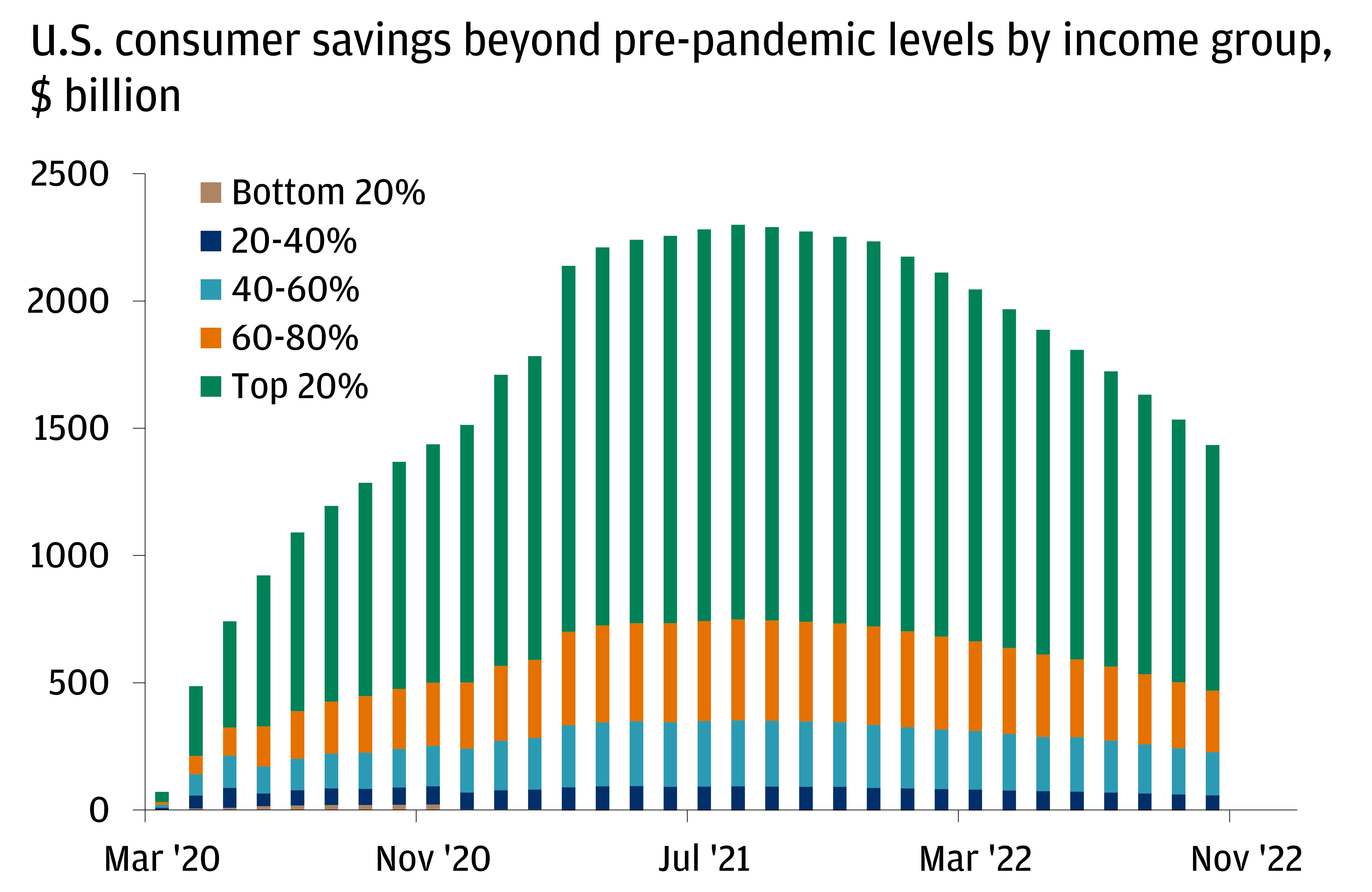
You see, the Americans who are doing most of the spending are not the ones who will be hit hardest by the rate increases. The biggest spenders are in the top fifth of the income ladder. The biggest losers will be in the bottom fifth.

Widening inequality has given the richest fifth a lot of room to keep spending. Even before the pandemic, they were doing far better than most other Americans.

Their current spending spree is a big reason you and your colleagues at the Fed are having so much difficulty slowing the economy by raising interest rates (in addition to the market power of many big corporations to continue raising prices and profit margins).

The higher rates are flowing back into the top fifth’s savings, on which they’re collecting interest.

The top fifth’s savings are still much higher than they were before the pandemic, so they can continue their spending spree almost regardless of how high you yank up rates. Take a look at this chart:

(Sources: J.P. Morgan Private Bank, Haver Analytics. Data as of October 2022.)

But yank up rates and you’ll impose big sacrifices on lower-income Americans. The study I mentioned a moment ago concludes that “there is no post-1950 precedent for a sizable central-bank-induced disinflation that does not entail substantial economic sacrifice or recession.”

There’s also no post-1950 precedent for the degree of income inequality Americans are now experiencing.

The people who will endure the biggest sacrifices as the economy slows will be the first to lose their jobs: mostly, those in the bottom fifth. Relying on further interest-rate hikes to fight inflation will only worsen the consequence of America’s near-record inequality.

There’s no reason for further hikes, anyway. Inflation is already slowing.

I understand your concern, Mr. Powell. What looked like a steady albeit gradual slowdown is now looking even more gradual.

But so what? It’s the direction that counts.

You should abandon your 2 percent target rate of inflation. There’s nothing sacrosanct about 2 percent. Why not 4? Getting inflation down to 2 percent is going to cause too much pain for the most vulnerable.

And you should suggest to Congress that it use other tools to fight inflation, such as barring corporations with more than 30 percent market share from raising their prices higher than the overall inflation rate — as recently proposed by New York’s attorney general.

May I be perfectly frank with you, sir? It would be terribly unjust to draft into the inflation fight those who are least able.

Thank you.

Robert Reich


Sports
Forcing Athletes To Stand For The National Anthem Is Stupid, Not Patriotic
Professional sports are overrun with schmaltzy patriotic displays that are not at all necessary and definitely should not be required for athletes.

By Nathanael Blake
June 7, 2018

President Trump has picked another fight over the NFL and the national anthem. After the league had reached a compromise — players will be allowed to stay in their locker rooms during the anthem, but they will be punished if they protest on the field during it — Trump decided to restart the conflict.
He abruptly cancelled a White House visit by members of the Super Bowl champion Philadelphia Eagles, and angrily tweeted, “Staying in the Locker Room for the playing of our national anthem is as disrespectful to our country as kneeling.” With that, the whole stupid controversy kicked off again.

Fortunately, there is a simple resolution available: Stop turning domestic sports into patriotic ceremonies. And if that is too much to ask, stop trying to force athletes to participate.
Professional sports are overrun with schmaltzy patriotic displays. For example, Major League Baseball has the national anthem before the game, some sort of military tribute a few innings in — “honor our military men and women by waving your caps!” — and often more patriotic singing after a few more innings. The renditions are frequently terrible (I habitually mute them if they are part of pregame coverage) and the military tributes do nothing to actually help members of the military.
In fact, professional sports have made money off the military; in the last decade, teams received millions of taxpayer dollars for paid patriotism. That the Pentagon would sponsor these spectacles is unsurprising, as increased displays of sporting patriotism have usually coincided with war. For instance, the singing of “God Bless America” became a regular fixture during baseball games after the 9/11 terrorist attacks.
In a nation that is at war or otherwise endangered, it is understandable that large gatherings of people would be receptive to patriotic displays. But although this pageantry obviously appeals to many people, there is no real need for a connection between sports and patriotic spectacle. Professional sports did not have to become the locus of public patriotism in this country.

That they have puts athletes in a bind. They are paid to compete at the highest levels of human athletic ability, not to be star-spangled sideline props. But the latter has become expected of them, as a semi-official part of their duties. Sack the quarterback, hit the baseball, make the 3-pointer, participate in patriotic rituals — one of these is not like the others, and it is a demand that is not imposed on the rest of us.
I’ve worked jobs from cooking fast food to teaching undergraduates, and none of them, not even the government jobs, had mandatory patriotic displays. Despite his indignation at others, I doubt that President Trump begins each workday by standing for the playing of the national anthem.
It is therefore understandable that some athletes would resent being treated as props in patriotic spectacles that have nothing to do with their actual job, particularly if they believe that America is failing to address systematic injustices. They should be free to engage in silent protest during these required patriotic displays, even if their cause is wrong.
The peaceful protesting of perceived injustice is in accord with the higher ideals of our nation, whereas mandatory patriotic displays are incompatible with the American belief in liberty and limited government. Protesting during a voluntary ceremony might be rude, but protesting during a ceremony that is required (whether explicitly or de facto) is the only option available to dissenters.

The outrage over the anthem protests is a right-wing version of political correctness that is antithetical to our nation’s culture of freedom. If you don’t want people to protest during patriotic ceremonies, then don’t try to make participation in them mandatory. The president pressuring private organizations to establish patriotic participation policies to his liking is an un-American abuse of power.
Sporting events should not be at the center of our patriotic practices. But if they are, then the athletes should not be required, or even expected, to participate. Their job is to display human excellence in physical competition, not to serve as red-white-and-blue accessories during national pep rallies. If we will not curtail the patriotic bloat attached to professional sports, then we must protect the freedom for athletes to opt out. Contrary to Trump’s apparent wishes, NFL players should be allowed to stay in the locker room during the national anthem, and there should be no pressure for them to do otherwise.
It is silly to argue, as some have, that because the government would not be directly mandating their participation, their freedom would not be infringed upon. Even if the president were not applying public pressure, it is imperative that freedom be preserved not just from government, but also from the mob. The legal protection of free speech (which necessarily includes the right to inaction and silence) will not long survive if it is culturally destroyed. With regard to the NFL and the rest of our nation’s sporting scene, we must be tolerant of those who, for reasons good or bad, do not wish to participate in the patriotic circus.
Mandatory patriotism isn’t patriotic.
Nathanael Blake has a PhD in political theory. He lives in Missouri.

Please Donate


By David J. Lynch 6 hrs ago

The Washington Post


Bill Adler was invited last year to bid on a contract to make commercial sausage stuffers for a company that wanted to replace its Chinese supplier. The customer had just one non­negotiable demand: Match China’s price.

Adler, owner of metal-parts maker Stripmatic Products, thought he could. But even as he readied his proposal, talk of President Trump’s steel tariffs sent the price of Stripmatic’s main raw material soaring.
In April, with prices up nearly 50 percent from October and the first wave of tariffs in place, Adler’s bid failed. His costs were too high.
Today, instead of taking business from China, Adler worries about hanging onto the work he has. He hopes that the president’s tariffs are just a negotiating tactic.
“It’s got to be short-term, or I’ve got to find another way to make a living,” Adler said, only half joking. “It’s going to be an ugly scenario if it doesn’t end quickly.”
Stripmatic’s plight is an example of the hidden costs of Trump’s “America First” protectionism. During decades of increasing globalization, leaders of both political parties reassured critics that the gains from trade were dispersed across myriad less-expensive products — and thus often difficult to identify — while the costs were obvious every time a factory closed.
Now, as Trump seeks to unwind globalization, that logic operates in reverse. The gains from protectionism can be seen in the new solar plants and reopened steel mills that his various tariffs are encouraging and that the president often celebrates.
But the full costs of his policies — in investments foregone and workers not hired — escape casual scrutiny. If Stripmatic’s experience is any guide, protectionism may already be backfiring on Americans and undermining Trump’s stated goal of reclaiming manufacturing from China.
“That is absolutely the lesson,” said economist Phil Levy, who worked on trade policy in the George W. Bush White House. “It is a supply chain. The administration has favored the first link over the later links in the chain. The net effect helps neither American manufacturing nor national security.”
Commerce Secretary Wilbur Ross has minimized the economic cost of Trump’s tariffs, claiming the steel and aluminum tariffs will add a “very small fraction of 1 percent” to prices across the economy, he recently told CNBC. U.S. Trade Representative Robert E. Lighthizer has said that tariffs the administration may impose on Chinese goods have been selected to minimize the impact on consumers.
But tariffs on materials used to make other products ripple through the entire economy. Trump’s steel levies were designed to punish China for swamping global markets with state-subsidized metals and to promote U.S. manufacturing. From where Adler sits, they appear to be doing the opposite. By raising the cost of a key manufacturing input, the tariffs are making many U.S. companies less competitive.
Discouraging metal imports benefits U.S. steel producers. But it also translates into a surplus of steel in markets outside the United States and thus lower prices for U.S. competitors.
As steel prices in the United States rise, Adler worries they will pinch his employees’ bonuses and profit-sharing checks. The 25 percent increase in Stripmatic’s sales that he anticipated from the sausage stuffercontract, the $1 million in new factory investment and the 10 new jobs it would have created have evaporated.
“If it wasn’t for the increase that came on because of the threat of tariffs, then I honestly believe we’d be supplying these domestically,” Adler said of the machines that pack ground meat into sausage casings. “This directly affects my life, my employees, my investments.”
In a $20 trillion economy, 10 jobs may not seem significant. But Trump’s frequent use of tariffs has sparked protests from farmers and industry groups that will be hurt by the administration’s import levies or retaliation from U.S. trading partners. The cumulative cost of the president’s higher import taxes will be a net loss of more than 400,000 jobs, according to a new study by the Trade Partnership, a pro-trade research consultancy.
A bipartisan group of 34 lawmakers wrote to Lighthizer on May 30 warning of “significant unintended adverse conse­quences for the United States” if the tariff wars continue. Republican senators including Bob Corker of Tennessee and Mike Lee of Utah are exploring legislation to limit the president’s ability to erect such trade barriers.
Yet if tiny Stripmatic demonstrates the double-edged nature of tariffs as an instrument of economic policy, the company’s experience should offer minimal comfort to the president’s political adversaries.
Despite the market turmoil unleashed by the president’s actions, Adler remains appreciative of the business tax cut that Trump secured last year and the administration’s broader deregulation efforts.
He was a reluctant Trump voter in 2016 and remains wary of the president’s bombastic style. But Adler likes having someone in the White House who respects business owners in a way that he doesn’t believe leading Democrats do.
With a new General Motors order for SUV parts, business is good — for now. This year, Adler added eight workers and spent $1.3 million on new factory equipment.
But times would have been better if he had landed that big food- processing-equipment contract. Rising labor costs in China and Stripmatic’s increasing efficiency gave him a real shot at a major win. He blames Trump’s trade policies for costing him the job and for imperiling Stripmatic’s future, as almost one-quarter of his sales come from abroad.
“Our customers source on a global market,” he said. “I’m going to be at least 30 to 40 percent disadvantaged on steel. . . . I’ve lost my competitive advantage.”
Stripmatic, dating to 1946, is among thousands of mostly unknown manufacturing companies that make up the backbone of industrial America. From a 60,000-square-foot plant just off the highway a few miles south of downtown Cleveland, Adler’s roughly 40-person team churns out tubular metal products.
Most are unremarkable parts that fit inside larger components, such as shock absorbers, or structural spacers that support the frame of Dodge Ram trucks and Jeep Wranglers. The company specializes in mass production of carbon steel parts.
Adler, 61, a Cleveland native, worked briefly in a local steel mill while attending college and then sold aluminum for several years before buying the company in 1992 with his wife, Liz. In about five years, they built the company to about $8 million in sales from less than $1 million and retired their debt.
But Chinese factories emerged as low-cost competitors with China’s 2001 membership in the World Trade Organization. As several of his large customers turned to less expensive Chinese rivals, Adler fine-tuned his operations to reduce waste.
He introduced automatic sensors that could check more than 100 parts every minute, more than three times the number a human could handle, and shifted his workers into higher-skilled positions.
“We were able to become more competitive and maintain our profit margins,” he said.
Adler is a veteran of an earlier bout of protectionism, the 2002 steel tariffs, which pushed one-fifth of U.S. metal-stamping businesses into collapse, according to the Census Bureau. Stripmatic laid off a handful of workers and froze hiring for four years.
Sales stagnated for several years, but Adler hung on. Efforts to diversify away from a near-total dependence on the auto industry into products such as plastic toys never worked out. That’s one reason the recent loss of the food-processing job was so painful.
Inside the factory, enormous metal presses rhythmically pound rolls of steel into auto and truck parts, the noises resounding like an industrial orchestra. The modern arc of metal stamping is on display, from a modified century-old device that bends unused steel into tight coils to a 4,000-watt laser-welding station at the opposite end of the plant, which instantly stitches a tight seal on metal parts.
Massive yellow, blue and green bins hold tens of thousands of metal parts. Roughly 20 percent are exported to factories in Mexico; an additional few percentage points go to Taiwan and Brazil.
As he stands on the plant floor, a ruddy-faced Adler wonders what this scene will look like in a few months. He’s in a fiercely competitive business, and his profits will melt if Trump’s tariffs remain indefinitely.
Already, prices for one type of steel that Adler uses — hot-rolled coil — are roughly twice what they were when Trump was elected, according to one widely used Midwestern index. And they are headed higher. “I don’t think they’re done yet. That’s the problem,” said Tony Scrima, 58, his plant manager, who’s worked here since he was 18.
Adler’s big worry is his Mexican customers. He hopes they won’t bolt for a cheaper, non-American alternative. But he can’t be sure what the president plans. “I try to erase what he says and look at the [economic] levers he’s pulling,” Adler said. “Is this all a negotiating tool to end up with a good result? I don’t know. But if it is, it’s got to go fast.”

Please Donate