Skip navigation

Monthly Archives: March 2020


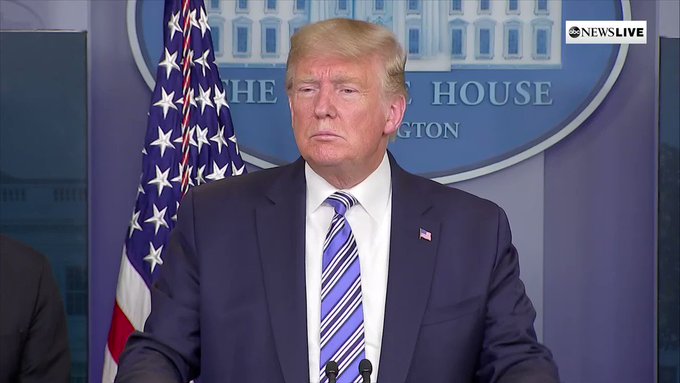
The recent photo op or press briefing held by TOTUS highlights the incompetency of this administration. The seeming restrained demeanor offered by TOTUS is belied by his inability to stand still while others were speaking. He appeared distracted but acted as master of ceremonies as he introduced each person on the stage as he needed them to present a piece of the presentation. He also referred the questions from the press. All of this due to his inability to present the information in a coherent manner without hyperbole and runoff. It has always been apparent that TOTUS has no ability to present information in a coherent fashion on his own. When left to his own devices TOTUS has ranted to the cheers of the crowd while presenting nothing of substance or any semblance to the truth. Totus’s body language tells his truth(?)  and explains his method of Governing.

Without accolades TOTUS is no more than an inept administrator surrounded by miscreants and Toadies who do his bidding while swallowing the bile coming up in their throats.

btn_donateCC_LG

Please Donate


UPDATED: APR 10, 2019 ORIGINAL:AUG 18, 2017

Democratic defectors, known as the “Dixiecrats,” started a switch to the Republican party in a movement that was later fueled by a so-called “Southern strategy.”

BECKY LITTLE


The night that Democratic President Lyndon B. Johnson signed the Civil Rights Act of 1964, his special assistant Bill Moyers was surprised to find the president looking melancholy in his bedroom. Moyers later wrote that when he asked what was wrong, Johnson replied, “I think we just delivered the South to the Republican party for a long time to come.”

It may seem a crude remark to make after such a momentous occasion, but it was also an accurate prediction.

To understand some of the reasons the South went from a largely Democratic region to a primarily Republican area today, just follow the decades of debate over racial issues in the United States.

On April 11, 1968 President Lyndon Johnson signs the Civil Rights bill while seated at a table surrounded by members of Congress, Washington DC. (Credit: Warren Leffler/Underwood Archives/Getty Images)

The Republican party was originally founded in the mid-1800s to oppose immigration and the spread of slavery, says David Goldfield, whose new book on American politics, The Gifted Generation: When Government Was Good, comes out in November.

“The Republican party was strictly a sectional party, meaning that it just did not exist in the South,” he says. “The South couldn’t care less about immigration.” But it did care about preserving slavery.

After the Civil War, the Democratic party’s opposition to Republican Reconstruction legislation solidified its hold on the South.

“The Democratic party came to be more than a political party in the South—it came to be a defender of a way of life,” Goldfield says. “And that way of life was the restoration as much as possible of white supremacy … The Confederate statues you see all around were primarily erected by Democrats.”

The Dixie Democrats seceding from the Democratic Party. The rump convention, called after the Democrats had attached President Truman’s civil rights program to the party platform, placed Governor Strom Thurmond of South Carolina and Governor Fielding L. Wright of Mississippi in nomination.

Up until the post-World War II period, the party’s hold on the region was so entrenched that Southern politicians usually couldn’t get elected unless they were Democrats. But when President Harry S. Truman, a Democratic Southerner, introduced a pro-civil rights platform at the party’s 1948 convention, a faction walked out.

These defectors, known as the “Dixiecrats,” held a separate convention in Birmingham, Alabama. There, they nominated South Carolina Governor Strom Thurmond, a staunch opposer of civil rights, to run for president on their “States’ Rights” ticket. Although Thurmond lost the election to Truman, he still won over a million popular votes.

It “was the first time since before the Civil War that the South was not solidly Democratic,” Goldfield says. “And that began the erosion of the southern influence in the Democratic party.”

After that, the majority of the South still continued to vote Democratic because it thought of the Republican party as the party of Abraham Lincoln and Reconstruction. The big break didn’t come until President Johnson, another Southern Democrat, signed the Civil Rights Act in 1964 and the Voting Rights Act in 1965.

Govenor Strom Thurmond of South Carolina, was nominated as States’ Right candidate at the rump convention held in Birmingham on by southern recalcitrants. The Southerners took this drastic action after the Democratic convention added President Truman’s civil rights program of its party platform.

Though some Democrats had switched to the Republican party prior to this, “the defections became a flood” after Johnson signed these acts, Goldfield says. “And so the political parties began to reconstitute themselves.”

The change wasn’t total or immediate. During the late 1960s and early ‘70s, white Southerners were still transitioning away from the Democratic party (newly enfranchised black Southerners voted and continue to vote Democratic). And even as Republican Richard Nixon employed a “Southern strategy” that appealed to the racism of Southern white voters, former Alabama Governor George Wallace (who’d wanted “segregation now, segregation tomorrow, and segregation forever”) ran as a Democrat in the 1972 presidential primaries.

By the time Ronald Reagan became president in 1980, the Republican party’s hold on white Southerners was firm. Today, the Republican party remains the party of the South. It’s an ironic outcome considering that a century ago, white Southerners would’ve never considered voting for the party of Lincoln.

btn_donateCC_LG

Please Donate


Again TOTUS is concerned about his image and not the health of the American Citizens. Anyone in his administration who tells the truth is on the short list to be dismissed. His stream of misinformation is dangerous. MA
HuffPost

‘Where Is Dr. Fauci?’ Key Expert Missing From Coronavirus Briefing For Second Day

HuffPost

Dr. Anthony Fauci, one of the nation’s touchstones for scientific wisdom amid the spread of COVID-19, was absent from the White House’s daily briefing for the second day in a row on Monday, prompting many to wonder where the nation’s top infectious disease expert was as the nation reels from the rising pandemic.

President Donald Trump spoke about the administration’s efforts to rein in the outbreak and provide personal protective equipment to some hospitals already straining under an influx of sick patients. But while the president repeated platitudes about the country soon being “stronger than ever before,” there was limited medical advice given.

Fauci, who serves as the director of the National Institute of Allergy and Infectious Diseases, has for many become a beacon of truth and straight talk as coronavirus continues to spread around the country, often walking back unfounded claims made by the president (the timeline of a coronavirus vaccine, for example, or the growth rate of infections).

But Fauci’s microphone has also reportedly drawn the president’s ire. The New York Times reported Monday that Trump has become frustrated with Fauci’s blunt manner and his contradicting of White House statements.

The National Institutes of Health said Monday that Fauci was still a regular part of the White House briefing schedule.

“He has been at the White House today, in fact,” a spokesperson for the NIH told HuffPost. “They are doing a rotating cast for the briefings.”

When asked about reports that Trump had become frustrated with Fauci’s no-nonsense approach to his warnings about the threat of coronavirus, the NIH directed questions to the White House.

The Trump administration did not immediately reply to a request for comment on Fauci’s appearances.

President Donald Trump speaks about the coronavirus as Attorney General William Barr and Dr. Deborah Birx, the White House coronavirus response coordinator, listen. (Photo: Alex Brandon/ASSOCIATED PRESS)

Dr. Deborah Birx, the White House’s coronavirus response coordinator, spoke about the infection rates in states around the country, saying each state would have its own disease curve to deal with. But she declined to answer repeated questions on if she agreed with Trump’s assessments that the country could soon go back to business as usual or about what kind of timeline for a return to normality that Americans should expect.

“What the president has asked us to do is assemble all the data and give us our best medical recommendation,” she said. “We’re pulling all of the data pieces right now. I will never speculate on data. I will have to see that data.”

Fauci gave an in-depth interview to Science this weekend and addressed how he had managed to remain at the White House when many, many others who have stood in Trump’s path have been fired for disagreements.

“Even though we disagree on some things, he listens,” Fauci told the scientific journal. “He goes his own way. He has his own style. But on substantive issues, he does listen to what I say.”

Trump did say Monday that he had “learned a lot” from Fauci and Birx.

“I can say I’m a student, you’re a student, we’re all in this together,” Trump said. “I’ve learned a lot from Deborah, I’ve learned a lot from Tony, from a lot of people.”

When pressed about where Fauci was on Monday, the president pledged he would be “back up very soon.”

“I was just with him for a long time,” Trump said. “He understand this is a tremendous test to our country. It was nobody’s fault; it just happened. This horrible virus came from nowhere. He fully understands that.”

“He’s a good man” the president continued. “I like Dr. Fauci a lot.”

Trump said repeatedly he was hoping to “open up” the country and its foundering economy “a lot sooner” than people were expecting. The Washington Post reported Monday that the White House was weighing calls from GOP lawmakers and advisers to scale back social distancing steps in order to kickstart the financial markets despite warnings from public health officials.

When asked what public health officials thought of the plan, including Fauci, Trump said they didn’t disagree with him, but he also alluded that measures called for by the medical community were at odds with what he considers best for the economy.

“If it were up to the doctors, they’d say let’s shut down the entire world,” Trump said, noting earlier: “I’m not looking at months. We’re going to be opening up our country. … You can’t keep it closed for years. OK? This is going away. We’re going to win the battle.”


This article originally appeared on HuffPost.

btn_donateCC_LG

Please Donate


Stable Genius again concerned about his own image instead of the whats good for the country ergo the voters. MA

Jim Tankersley, Maggie Haberman and Roni Caryn Rabin-The New York Times

7 hrs ago

WASHINGTON — As the United States entered Week 2 of trying to contain the spread of the coronavirus by shuttering large swaths of the economy, President Trump, Wall Street executives and many conservative economists began questioning whether the government had gone too far and should instead lift restrictions that are already inflicting deep pain on workers and businesses.

Consensus continues to grow among government leaders and health officials that the best way to defeat the virus is to order nonessential businesses to close and residents to confine themselves at home. Britain, after initially resisting such measures, essentially locked down its economy on Monday, as did the governors of Virginia, Michigan and Oregon. More than 100 million Americans will soon be subject to stay-at-home orders.

Relaxing those restrictions could significantly increase the death toll from the virus, public health officials warn. Many economists say there is no positive trade-off — resuming normal activity prematurely would only strain hospitals and result in even more deaths, while exacerbating a recession that has most likely already arrived.

The economic shutdown is causing damage that is only beginning to appear in official data. Morgan Stanley researchers said on Monday that they now expected the economy to shrink by an annualized rate of 30 percent in the second quarter of this year, and the unemployment rate to jump to nearly 13 percent. Both would be records, in modern economic statistics.

Officials have said the federal government’s initial 15-day period for social distancing is vital to slowing the spread of the virus, which has already infected more than 40,000 people in the United States. But Mr. Trump and a chorus of conservative voices have begun to suggest that the shock to the economy could hurt the country more than deaths from the virus.

On Monday, Mr. Trump said his administration would reassess whether to keep the economy shuttered after the initial 15-day period ends next Monday, saying it could extend another week and that certain parts of the country could reopen sooner than others, depending on the extent of infections.

“Our country wasn’t built to be shut down,” Mr. Trump said during a briefing at the White House. “America will, again, and soon, be open for business. Very soon. A lot sooner than three or four months that somebody was suggesting. Lot sooner. We cannot let the cure be worse than the problem itself.”

Similar views are emanating from parts of corporate America, where companies are struggling with a shutdown that has emptied hotels, airplanes, malls and restaurants and sent the stock market tumbling so fast that automatic circuit breakers to halt trading have been tripped repeatedly. Stocks have collapsed about 34 percent since the coronavirus spread globally — the steepest plunge in decades — erasing three years of gains under Mr. Trump.

Lloyd Blankfein, the former chief executive of Goldman Sachs, wrote on Twitter that “crushing the economy” had downsides and suggested that “within a very few weeks let those with a lower risk to the disease return to work.”

Even Gov. Andrew M. Cuomo of New York, whose state has emerged as the epicenter of the outbreak in the United States, has begun publicly floating the notion that, at some point, states will need to restart economic activity and debating how that should unfold.

“You can’t stop the economy forever,” Mr. Cuomo said in a news conference on Monday. “So we have to start to think about does everyone stay out of work? Should young people go back to work sooner? Can we test for those who had the virus, resolved, and are now immune and can they start to go back to work?”

Any push to loosen the new limits on commerce and movement would contradict the consensus advice of public health officials, risking a surge in infections and deaths from the virus. Many economists warn that abruptly reopening the economy could backfire, overwhelming an already stressed health care system, sowing uncertainty among consumers, and ultimately dealing deeper, longer-lasting damage to growth.

The recent rise of cases in Hong Kong, after there had been an easing of the spread of the virus, is something of an object lesson about how ending strict measures too soon can have dangerous consequences. Yet places like China, which took the idea of lockdown to the extreme, have managed to flatten the curve.

“You can’t call off the best weapon we have, which is social isolation, even out of economic desperation, unless you’re willing to be responsible for a mountain of deaths,” said Arthur Caplan, a professor of bioethics at NYU Langone Medical Center. “Thirty days makes more sense than 15 days. Can’t we try to put people’s lives first for at least a month?”

For the last four days, some White House officials, including those working for Vice President Mike Pence, who leads the coronavirus task force, have been raising questions about when the government should start easing restrictions.

Among the options being discussed are narrowing restrictions on economic activity to target specific age groups or locations, as well as increasing the numbers of people who can be together in groups, said one official, who cautioned that the discussions were preliminary.

Health officials inside the administration have mostly opposed that idea, including Dr. Anthony S. Fauci, an infectious diseases expert and a member of the White House coronavirus task force, who has said in interviews that he believes it will be “at least” several more weeks until people can start going about their lives in a more normal fashion.

Dr. Deborah L. Birx, the White House coronavirus response coordinator, said the United States had learned from other countries like China and South Korea, which were able to control the spread of the virus through strict measures and widespread testing.

“Those were eight- to 10-week curves,” she said on Monday, adding that “each state and each hot spot in the United States is going to be its own curve because the seeds came in at different times.”

Dr. Birx added that the response “has to be very tailored geographically and it may have to be tailored by age group, really understanding who’s at the greatest risk and understanding how to protect them.”

Other advisers, including members of Mr. Trump’s economic team, have said repeatedly in recent months that the virus does not itself pose an extraordinary threat to Americans’ lives or the economy, likening it to a common flu season. Some advisers believe the White House overreacted to criticism of Mr. Trump’s muted actions to deal with the emerging pandemic and gave health experts too large a sway in policymaking.

On Monday, Mr. Trump echoed those concerns, saying that things like the flu or car accidents posed as much of a threat to Americans as the coronavirus and that the response to those was far less draconian.

“We have a very active flu season, more active than most. It’s looking like it’s heading to 50,000 or more deaths,” he said, adding: “That’s a lot. And you look at automobile accidents, which are far greater than any numbers we’re talking about. That doesn’t mean we’re going to tell everybody no more driving of cars. So we have to do things to get our country open.”

Trump has watched as a record economic expansion and booming stock market that served as the basis of his re-election campaign evaporated in a matter of weeks. The president became engaged with the discussion on Sunday evening, after watching television reports and hearing from various business officials and outside advisers who were agitating for an end to the shutdown.

Casey Mulligan, a University of Chicago professor who served as chief economist for Mr. Trump’s Council of Economic Advisers, said on Monday that efforts to shut down economic activity to slow the virus would be more damaging than doing nothing at all. He suggested a middle ground, one that weighs the costs and benefits of saving additional lives.

“It’s a little bit like, when you discover sex can be dangerous, you don’t come out and say, there should be no more sex,” Mr. Mulligan said. “You should give people guidance on how to have sex less dangerously.”

Many other economists say the restrictions in activity now are helping the economy in the long run, by beginning to suppress the infection rate.

“The idea that there’s a trade-off between health and economics right now is likely badly mistaken,” said Jason Furman of Harvard University, a former chairman of the Council of Economic Advisers under President Barack Obama. “The thing damaging our economy is a virus. Everyone who is trying to stop that virus is working to limit the damage it does to our economy and help our eventual rebound. The choice may well be taking pretty extreme steps now or taking very extreme steps later.”

Mr. Furman and other economists have pushed Mr. Trump and Congress to ease the economic pain by offering trillions of dollars in government assistance to affected workers and businesses. As lawmakers tried to negotiate an agreement on such a bill Monday, an influential business lobbying group, the U.S. Chamber of Commerce, said it supported restrictions on the economy to slow the virus.

“Our view is, when it comes to how you contain the virus, you do everything the public health professionals say to contain the virus,” said Neil Bradley, the chamber’s executive vice president and chief policy officer.

The president’s suggestion that the response may be an overreaction plays into doubts already held by some Americans suffering the economic consequences. Among the self-quarantined, some have questioned the purpose of isolating themselves if the virus is already circulating widely. Students sent home from college have wondered whether they are more likely to infect higher-risk older adults at home.

Dan Patrick, Texas’ lieutenant governor, said Monday on Fox News that he was in the “high-risk pool” but would be willing to risk his life to preserve the country for his children and grandchildren.

“We are going to be in a total collapse, recession, depression, collapse in our society,” said Mr. Patrick, who turns 70 next week. “If this goes on another several months, there won’t be any jobs to come back to for many people.”

But public health officials stress that there would be consequences to ending the measures too quickly. In a tweet on Monday morning, Thomas P. Bossert, the former homeland security adviser who for weeks has been vocal about the need for the U.S. government to take stricter measures, said: “Sadly, the numbers now suggest the U.S. is poised to take the lead in #coronavirus cases. It’s reasonable to plan for the US to top the list of countries with the most cases in approximately 1 week. This does NOT make social intervention futile. It makes it imperative!”

Mr. Trump’s interest in potentially easing some of the restrictions met with pushback from one of his close allies, Senator Lindsey Graham, Republican of South Carolina, who himself self-quarantined after a potential exposure. “President Trump’s best decision was stopping travel from China early on,” Mr. Graham tweeted on Monday. “I hope we will not undercut that decision by suggesting we back off aggressive containment policies within the United States.”

Health officials remain largely united in defense of sustaining the restrictions.

“There is a way to think through how and when to start reopening our economy and society, and it’s important to get this right,” said Dr. Thomas R. Frieden, a former director of the Centers for Disease Control and Prevention.

Dr. Tom Inglesby, the director of the Center for Health Security at the Johns Hopkins Bloomberg School of Public Health, pointed to the experience of countries like Italy, which did not institute aggressive measures to stop the spread of the virus and saw infection rates and deaths soar as a result.

The United States will need “a couple weeks” to see positive effects from its measures, Dr. Inglesby said, and abandoning them would mean “patients will get sick in extraordinary numbers all over the country, far beyond what the U.S. health care system will bear.”

Reporting was contributed by Carl Hulse, David E. Sanger, Amy Harmon and Eduardo Porter.

Carl Hulse, David E. Sanger, Amy Harmon and Eduardo Porter contributed report

btn_donateCC_LG

Please Donate


Online scams that are targeted to major news events have been around for more than a decade. With the constant news cycle on the Coronavirus (COVID-19), fraudsters have been focusing their attention wholly on this topic and finding new ways to gather secure data from scared consumers.

You should be highly skeptical of any emails and websites that claim to provide information or goods related to the ongoing pandemic. Emails and websites are promising vital information about keeping you safe from the coronavirus pandemic. In fact, a flood of them are scams that push malware, ransomware, and disinformation, and attempt to steal passwords and personal information. The key fact to confirm is the primary source of those communications. Never take source claims at face value. One of the most reliable sources for legitimate information the US Centers for Disease Control and Prevention. Communications from local health departments can also be helpful, but only when the emails or websites can be confirmed as coming from a legitimate agency.

What You Can Do?


To avoid these schemes, please observe the following best practices:

  • Do not click on links or attachments from sources that you do not recognize
  • Do not provide sensitive personal information (like usernames and passwords) over email or the phone
  • Watch for email senders that use suspicious or misleading domain names
  • Inspect URLs (the address of the website) carefully to make sure they’re legitimate and not impostor sites
  • Do not try to open any shared document that you’re not expecting to receive
  • Do not offer any sensitive information to someone who calls you, even if you think you recognize them as a friend or family

Lastly, if it sounds too good to be true, it likely is not true. Products that claim to provide personal health protection against the novel coronavirus are likely untrue or outdated (related to an old strain of coronavirus). For helpful resources regarding Coronavirus (COVID-19), visit The Centers for Disease Control and Prevention’s Coronavirus Disease 2019 fact page.

And of course, if you feel your financial accounts have been compromised with fraud, please call us at (636) 916-8300 or chat online with a 1st Financial representative as soon as possible.

We were created 50 years ago to help our members through every situation, including your hardest moments. This is what we are here for. Let us help.  

btn_donateCC_LG

Please Donate


Robert Costa, Aaron Gregg
New York’s Cuomo urges Trump to use Defense Production Act

President Trump’s response to the coronavirus pandemic sparked uproar and alarm among governors and mayors on Sunday as Trump and his administration’s top advisers continued to make confusing statements about the federal government’s scramble to confront the crisis, including whether he will force private industry to mass produce needed medical items.

As deaths climbed and ahead of a potentially dire week, Trump — who has sought to cast himself as a wartime leader — reacted to criticism that his administration has blundered with a torrent of soaring boasts and searing grievances. He tweeted that Illinois Gov. J.B. Pritzker (D) and others “shouldn’t be blaming the Federal Government for their own shortcomings. We are there to back you up should you fail, and always will be!”

Trump changed his tone at an evening news conference, however, touting an “amazing” relationship with New York Gov. Andrew M. Cuomo (D) and saying governors he spoke with on Sunday will be “very happy” with the upcoming federal response.

“The governors, locally, are going to be in command,” Trump said, as he pledged support from the National Guard and federal agencies. “We will be following them, and we hope they can do the job. And I think they will.”


But the growing gulf between the White House and officials on the front lines of the pandemic underscored concerns in cities, states and Congress that Trump does not have a coherent or ready plan to mobilize private and public entities to confront a crisis that could soon push the nation’s health-care system to the brink of collapse.

“We’re all building the airplane as we fly it right now,” Michigan Gov. Gretchen Whitmer (D) said on ABC’s “This Week.” “It would be nice to have a national strategy.”

Uncertainty prompted by the Trump administration’s statements abounded amid the rancor. Federal Emergency Management Agency Administrator Peter T. Gaynor said Sunday the president has not yet invoked the Defense Production Act, which would allow the government to order companies to ramp up the production of ventilators and protective masks, among other products.

Gaynor’s remarks directly contradicted what Trump told reporters on Friday, when he said he had “invoked” the law and “put it into gear” — and were coupled with vague optimism about corporate America’s ability to do what is necessary without being compelled by an executive order.

“We haven’t yet,” Gaynor said on CNN’s “State of the Union,” when asked whether Trump has ordered companies to make supplies. He described the Defense Production Act as “leverage” as the administration moves forward and said, “If it comes to a point we have to pull the lever, we will.”

In the meantime, Gaynor said the administration is pleased with how corporations are responding to the pandemic. “It’s really amazing how great America is,” he said. “All these companies are coming up, asking us what they can do to help.”

Trump tweeted on Sunday, “Ford, General Motors and Tesla are being given the go ahead to make ventilators and other metal products, FAST!”

“Go for it auto execs, let’s see how good you are?” Trump added.

a man wearing a suit and tie: President Trump speaks during a coronavirus task force briefing at the White House on Sunday.© Patrick Semansky/AP President Trump speaks during a coronavirus task force briefing at the White House on Sunday.Major auto companies signaled last week that they are studying the feasibility of making ventilators but made no promises about the pace of production, should it begin. A spokesperson for Ford said, “Ford stands ready to help the administration in any way we can, including the possibility of producing ventilators and other equipment.”

There are many obstacles. Ford, General Motors and Fiat Chrysler — the Big Three automakers — have suspended production at their North American plants through at least the end of March because of the coronavirus and after union leaders sought that pause.

The administration’s sunny outlook about companies’ ability to act was met with sharp disagreement from governors facing mounting illness and deaths from covid-19, the disease caused by the novel coronavirus.

“We need the product now,” Cuomo said at a news conference on Sunday. “We have cries from hospitals around the state. I’ve spoken to governors around the country, and they’re in the same situation.”

Cuomo said the Trump administration must “order factories” to make “essential supplies” and invoke the Defense Production Act as soon as possible, calling it the “difference between life and death.”

New York Mayor Bill de Blasio announced Sunday that there are now 8,000 cases in his city, with 60 deaths. He pleaded with Trump to deploy the military to the nation’s financial capital, home to more than 8 million people.

“April is going to be a lot worse than March, and May could be worse than April,” de Blasio said. “We are very much on our own at this point.”

Anthony S. Fauci — director of the National Institute of Allergy and Infectious Diseases and an influential nonpartisan adviser to Trump — appeared to defend the president’s decision-making.

“What the president was saying is that these companies are coming forth on their own,” Fauci said on CBS’s “Face the Nation.” “I think that’s an extraordinary spirit of the American spirit of not needing to be coaxed. They’re stepping forward. They’re making not only masks, but [personal protective equipment] and now ventilators.”

Many governors and mayors said they feel ill-equipped for the coming storm, particularly the expected deluge of patients at hospitals and health centers.

Pritzker said on CNN that his state has received about a quarter of the personal protective equipment it has ordered from the federal government.

“I’ve got people working the phones calling across the world, frankly, to get this stuff to Illinois,” Pritzker said, as he worried that states are probably “overpaying” in part because of the lack of decisive action by Trump.

On Twitter, Trump dismissed Pritzker as part of a cabal aligned against him that includes “a very small group of certain other Governors” and cable news networks, which he disparaged as “fake news.”

But Democrats were not Trump’s lone critics on Sunday. Maryland Gov. Larry Hogan, a centrist Republican, said the Trump administration, through FEMA, “has to take the lead” in securing medical items.

“We are getting some progress. Now, it’s not nearly enough. It’s not fast enough. We’re way behind the curve,” Hogan said on NBC’s “Meet the Press,” as he detailed how Maryland is scrambling to find supplies without any guarantees from the federal government.

Gaynor, however, did not offer any assurances.

“What I’ll say is if you can find it on the open market, go buy it,” Gaynor said on NBC. “Any governor that needs it, and you find it, go buy it. FEMA will reimburse you under this emergency.”

He added, “I hope no one is hoarding” masks “because we’re all in this together.”

Turmoil at hospitals is challenging governors by the hour. Speaking Sunday on CBS, Richard Pollack, president of the American Hospital Association, said “the most immediate thing we need is personal protective equipment: the masks, the gowns, the goggles, that type of equipment to protect our health-care heroes that are on the front lines. That is what is most essential now. If we don’t protect our health-care workers, the system will completely collapse.”

Last week, Trump invoked rarely used wartime powers and announced the deployment of two naval ships as he tried to boost the federal response to the coronavirus outbreak after days of bureaucratic delays and missteps.

“We’ll be invoking the Defense Production Act, just in case we need it,” Trump said, referring to the 1950 law. “It can do a lot of good things if we need it.”

But Trump’s plans were ambiguous, and it remained unclear Sunday how he would implement them.

The president first said Wednesday, on Twitter, that he would be using the broad authorities granted by the act only if needed in a “worst-case scenario.” By Friday, Trump said he had formally invoked the Defense Production Act, “and last night, we put it into gear.”

Behind the scenes, the Trump administration has activated only a very limited set of authorities under the law, including a provision that allows the government to jump the line when ordering from U.S. manufacturers. The more extreme provisions in the law — including authorities that could allow it to take control of private airplanes or use federal funds to get other industries involved — have not been announced. Lawmakers debate whether coronavirus bailout will do enough.

When pressed at Sunday’s news conference on why he is not exerting more federal power under the act, Trump suggested it would be akin to countries such as Venezuela nationalizing industries.

“We’re a country not based on nationalizing our business,” Trump said. “The concept of nationalizing our business is not a good concept. . . . We have the threat of doing it if we need it.”

Former Pentagon officials who handled Defense Production Act policy for Democratic and Republican administrations said the Trump administration has so far made little use of the law.

“All of this should have started months ago, so we are behind,” said Bill Greenwalt, a defense consultant who led acquisition policy in the George W. Bush administration. “On production, I think we will find out that our base is not capable of producing what we need as I expect much of it has been outsourced to China and elsewhere.”

Gordon Adams, a former Clinton administration procurement official, said the administration’s efforts are months too late.

“It’s the right authority but it’s way late in the game,” Adams said. “We started hearing about Chinese cases in November. We probably should have been invoking DPA authorities in January or February. We had no plan.”

Fast-moving developments this week will increase pressure on Trump and agencies to offer more guidance and assistance.

Scott Gottlieb, a former commissioner of the Food and Drug Administration who was appointed by Trump, said on “Face the Nation”: “I think that the scenes out of New York are going to be shocking. I think that the hospitals in the next two weeks are going to be at the brink of being overwhelmed.”

Trump — who will be judged by voters at the polls in eight months — also faced criticism from former vice president Joe Biden, the delegate leader for the Democratic presidential nomination, who issued a statement in response to Gaynor’s interview on CNN.

“Mr. President, stop lying and start acting,” Biden said. “Use the full extent of your authorities, now, to ensure that we are producing all essential goods and delivering them where they need to go.”

robert.costa@washpost.com

aaron.gregg@washpost.com

Seung Min Kim and Toluse Olorunnipa contributed to this report.

btn_donateCC_LG

Please Donate


Alexander Nazaryan

National Correspondent

Yahoo News
Sen. Elizabeth Warren and President Trump. (Photo illustration: Yahoo News; photos: AP [2], J. Scott Applewhite/AP)

WASHINGTON — In approximately 10 months, a new presidential administration will take shape. It could be a second term of the Trump administration, or an entirely new one led by Joe Biden. It may come as the coronavirus epidemic still rages or, more likely, in the epidemic’s fraught aftermath.

And just how that administration takes shape could have great consequences in the years to come. That’s why there’s reason to cheer a little-noticed bill that could ensure that the transition is conducted with the proper ethical strictures in place — the kinds of strictures that did not exist in 2016.

No, the transitions bill won’t cure the coronavirus, but advocates of the legislation say it’s an unlikely success story, particularly given who championed it.

President Trump branded one of them “Pocahantas,” while she, in turn, calls him Vladimir Putin’s “elf on the shelf.” Earlier this month, in an unlikely act of bipartisanship, Trump signed a bill written, in part, by Elizabeth Warren, one of his most stinging critics in the Senate. What’s more, the bill seems to directly address the accusations of corruption she has leveled against him.

Trump may not have even known he was signing a bill written by Warren.

That’s because the bill, the Presidential Transition Enhancement Act of 2019, was principally sponsored by Sen. Tom Carper of Delaware, who is a Democrat, and Sen. Ron Johnson of Wisconsin, a Republican. The legislation is identical to a bill Warren and Carper had earlier introduced that was also supported by Rep. Elijah Cummings, the House Oversight Committee chairman who recently died. Cummings was as determined an adversary of Trump as Warren has been.

The bill would require every presidential transition to have — and release to the American people — an ethics plan. In effect, the new law amounts to a codified message that incoming presidents have to take ethics seriously.

Crucially, the law must also say what the president will do to resolve his or her own conflicts of interest. The measure was obviously written with Trump in mind, and was a provision especially dear to Warren. Like many Democrats, she remains dismayed by the president’s nebulous arrangement with the Trump Organization, the real estate and marketing business he founded, which is now operated by his sons.

Trump promised that his business interests would be placed in a “blind trust” after he took office, but he does not appear to have followed through with that promise.

Then-presidential candidate Donald Trump with family members on the "Today" show in April 2016. (Richard Drew/AP)
Then-presidential candidate Donald Trump with family members on the “Today” show in April 2016. (Richard Drew/AP)

Even supporters of the president admit the Trump transition was chaotic, ethically challenged and not always confidence-inspiring. “We could have done a much better job,” former White House chief political strategist Steve Bannon remembered in 2018. “Absolutely, much better job. It’s one of the things that Trump didn’t fight,” he said, referring to Trump’s promise to “drain the swamp” that was official Washington and to stock his White House with “the best people.”

This turned out to be difficult for a campaign that had made little preparation because it thought it had little chance of winning. “The swamp draining, we had all these potential things,” Bannon lamented of lost opportunities to enact an agenda aligned with his populist principles, which had helped Trump win the White House. “They just got ground up, and it just turned out not to be a priority.”

The bill passed the Senate with unanimous consent, which means there were no objections to the measure. It then passed the House with a voice vote, as its passage was never in doubt.

The legislation — the 15th law signed this year by a president who has spent most of 2020 fighting off impeachment and, now, the escalating coronavirus outbreak — places greater ethical strictures on how a president-elect puts in place key members of an administration in the critical weeks between election and inauguration. It amends the original 1963 law on presidential transitions and is part of a broader, yet-unrealized government ethics proposal introduced by Warren. That proposal would put strict new rules on public service, thus probably leading to the kind of swamp-draining Trump had promised. But that broader ethics plan is unlikely to be realized anytime soon, given Republican opposition to such measures.

The new law, relatively modest in scope, requires every presidential nominee to have a concrete, public ethics plan, one that will stipulate how the campaign will handle the hiring of lobbyists, potential conflicts of interest and restrictions on access to classified information during the transition period. It also stipulates how the candidate will address his or her own conflicts of interest if elected president.

Trump signed the bill into law on March 3. Warren had hoped to be the first president to have to abide by the new ethics provisions, but she ended her campaign two days after those provisions became law. Trump could also be the first who is subject to its strictures, since incumbent presidents have transitions.

Sen. Elizabeth Warren, with her husband, Bruce Mann, announces she is dropping out of the presidential race on March 5. (Scott Eisen/Getty Images)

While it may lack teeth — a president could simply create a plan that suits his or her own needs — the legislation will at least force the incoming administration to address potential conflicts of interest in a transparent fashion.

Trump and Warren did not celebrate with a round of golf at Mar-a-Lago. Instead, Warren noted the bill by bashing the man who signed it. “The Trump transition team was absolutely awash in conflicts and corruption, and now the American people can celebrate new rules to ensure that never happens again,” the Massachusetts senator told Yahoo News.

“I know he would be proud today,” she said of Cummings.

The bill received praise from the Partnership for Public Service, a bipartisan center focusing on good governance. A policy director there described it as an encouraging sign that a Capitol Hill that can agree on almost nothing found it can agree on something, and that that something turned out to be presidential ethics reform, of all things. Upon passage of the bill, the group praised legislators for codifying “lessons learned in the 2016 transition.”

Those lessons could probably fill a legal tome — and have already made for several popular books about how the days and weeks after Trump’s victory resulted in chaos in the months and years to come.

Trump’s transition was spearheaded by then-New Jersey Gov. Chris Christie, who did not believe Trump would win. Christie was fired after the election, and his plan — however flawed — was discarded. The transition was then divided between presidential son-in-law Jared Kushner, campaign manager and Breitbart publisher Steve Bannon and incoming chief of staff and GOP head Reince Priebus.

The transition was a “shallow hole,” says one campaign staffer who stayed on with Trump and served some time in the White House.

Former White House strategist Steve Bannon during a 2019 interview. (Thibault Camus/AP)

Because none of the three had high-level executive branch experience, Washington and Wall Street got to shape an administration that had promised to be beholden to neither. “The time we needed to put an apparatus around Trump, that gave him some time to work himself in to be commander in chief,” Bannon explained in 2018. But that involved many Republican operatives who had spent the previous eight years working in private industry. They were the very “deep state” whom Bannon feared, the people Trump was never going to pick.

“Here’s the brutal reality,” Bannon said. “There is not a deep bench of talent that could step into the government and run things.”

Once in office, Trump signed an executive order that would have seemed to close the revolving door between private industry and public service. But he has routinely granted waivers to officials with industry ties, robbing the executive order of any power it may have had.

What motivated him to sign a new ethics bill is not clear, though it may be that Johnson is a Trump ally, Carper is not a nemesis and Warren’s hand in the legislation simply went unnoticed by the White House. The White House declined to talk about the bill.

Warren, conversely, has wanted to talk about this since roughly the day Trump was elected. “Within days of your election, you have elevated a slew of Wall Street bankers, industry insiders, and special interest lobbyists to your transition team,” she wrote to him on Nov. 15, 2016, as the new administration was starting to take shape at Trump Tower.

And she reminded him of the now-famous refrain that had become the rallying cry of his campaign’s final stages. “Maintaining a transition team of Washington insiders sends a clear signal to all who are watching you — that you are already breaking your campaign promises to ‘drain the swamp’ and that you are selling out the American public,” Warren wrote. Trump did not answer.

btn_donateCC_LG

Please Donate

_____


TOTUS again running off with misinformation in order to give the impression of knowledge on a subject where he has none and to be the main topic of conversation. MA.


Kristen V Brown

and

Riley Griffin

March 21, 2020, 4:11 PM CDT Updated on March 21, 2020, 9:13 PM CDT

‘What do we have to lose?’ Trump asks, touting malaria drug

Experts raise doubts about small study of hydroxychloroquine

A tiny trial of a malaria drug may or may not have helped several patients in France fight off their coronavirus infections. The FDA has said it needs more study. Some expert doctors are skeptical. President Donald Trump is all for it.

On Saturday, Trump again promoted the drug at a White House briefing, and retweeted a post about a small scientific study that has been making the rounds for several days. It followed Trump’s comments Friday that the drug, hydroxychloroquine, was a “game changer,” that “we’re going to be able to make that drug available almost immediately,” and noting that patients could get it from their doctor.

“This miracle cure is based on six subjects, which does not give me a great deal of confidence,” said Hank Greely, a bioethicist at Stanford University, said of hydroxychloroquine. “This study is promising, provocative and worth following-up on, but it is nothing more than that.”

Hydroxychloroquine is part of an urgent effort to find treatments for the coronavirus that in just a few months has killed more than 10,000 people around the globe, and could well prove effective. But so far, there’s little proof of that. It does have two things going for it, however: it’s already on the market, and is available as a lower-cost generic medicine.

Trump is far from the only person of influence to tout the idea that a drug for malaria may offer a treatment for a virus that has infected more than 21,000 people in the United States. The same study had already attracted attention from Elon Musk. Musk’s initial tweet on the subject was liked more than 55,000 times.

Hydroxychloroquine has, in essence, gone viral.

It’s one of a number of drugs being tested for treatment of patients with Covid-19. But since the virus is a new pathogen, there are no ready-made drugs on offer. Instead, scientists have pulled from their existing armory, throwing everything at it, and hoping something works.

“What do we have to lose?” Trump said Saturday at the White House briefing, also acknowledging that scientists in his administration have called for more study. “We’re going to find out very shortly whether or not it is going to work. I feel very confident.”

Hospitals, anticipating a surge in demand, are stockpiling the drug, and some are already treating patients with it on an off-label basis. Medical institutions are gearing up to conduct further studies. Urgent-care centers and tele-health companies have seen increasing numbers of patients requesting hydroxychloroquine as they read about it online, and patients who actually require the drugs have at times not been able to obtain them.

But as attention and demand for hydroxychloroquine mounts, there’s one thing desperately missing — solid proof it actually helps, and that it doesn’t harm patients.

“The president is talking about hope for people, and it’s not an unreasonable thing,” Fauci said at the same briefing, speaking shortly after Trump. “My job is to ultimately prove, without a doubt, that a drug is not only safe but that it actually works.”

The study tweeted out by President Trump looked at 26 patients who had been hospitalized with Covid-19 in France, and compared them to 16 patients at another facility who did not receive the treatment. Of all 26 patients that got hydroxychloroquine, six also received azithromycin, an antibiotic. The six patients who got the antibiotic appeared to clear the virus from their bodies.

“Many of the things that you hear out there are what I had called anecdotal reports,” Fauci said. “They may be true, but they’re anecdotal.”

Scientists are eager to explore any avenue that may lead to a potential treatment, and so larger studies of the drug are gearing up. Hydroxychloroquine and the more-toxic drug it is derived from, chloroquine, are also commonly used to treat rheumatoid arthritis and lupus. Neither drug has been approved by the U.S. Food and Drug Administration to treat Covid-19.

David Ho, a famed AIDS researcher based at Columbia University, said that in the study the treatment didn’t appear to actually make a difference in whether patients lived or got better. And it’s possible that the decreases in the amount of virus found were because of flaws in how samples were collected, or patients may have simply recovered on their own — as most do.

Ho has given his laboratory over to studying Covid-19 and the virus that causes it, SARS-CoV-2.

“In a crisis like this, we need clarity,” Ho said. “Trump is doing just the opposite.”

The post retweeted by Trump on Saturday was authored by a little-known investor, entrepreneur and former biopharmaceutical analyst named Michael Coudrey, who also touted the same drug’s ability to fight HIV.

Reached on Twitter, Coudrey said he thought the study was promising but wasn’t strong enough to justify the drug’s wide use.

Fauci, asked whether the drug might be used preventatively against Covid-19, as it is with malaria, replied, “no.”

Long History

David Goldman, a pediatric infectious disease specialist at the Children’s Hospital at Montefiore, said though the French study “isn’t optimal and doesn’t constitute enough data to validate the new indication for that drug,” it still builds on years of research of hydroxychloroquine use in outbreaks of two related diseases, SARS and MERS.

For decades, researchers across the globe have investigated the effects of chloroquine on viral infections and against HIV. In the early 2000s, some found that it had the potential to inhibit the replication of the virus that causes SARS in mice, but other research subsequently cast doubt on that finding.

Goldman is currently working with stakeholders at Montefiore and the Albert Einstein College of Medicine at Yeshiva University to design a clinical trial that would evaluate hydroxychloroquine as a preventive treatment in more than 600 elderly residents living in nursing homes. He said Montefiore is already treating patients infected by the new coronavirus with hydroxychloroquine.

“Nobody really knows what will work, so let’s try everything: multiple different approaches, multiple different agents, based on the limited data that we have,” he said.

Drugmakers, too, are gearing up for the potential that the drug may work. Novartis AG, Teva Pharmaceutical Industries Ltd and Bayer AG have plans to ramp up production and donate millions of tablets for U.S. pandemic response, while Mylan NV is re-starting manufacturing.

Patient Demand

Some patients, with no treatment currently approved to treat the virus, seem less interested in waiting.

Caesar Djavaherian, co-founder and medical director of Carbon Health, a tele-health company and group of 16 clinics in the Bay Area, said that every day over the past week, patients have come in requesting to try the drug.

“The president and others that have publicized this drug have really put us in a tough spot,” he said.

Chloroquine phosphate prescriptions tripled in the U.S. between Feb. 14 and March 13, according to data compiled by Bloomberg and Symphony Health, while hydroxychloroquine sulfate prescriptions, which are issued at a much greater volume in the U.S., jumped more than 12% over the same period.

Data compiled by the drug shopping website GoodRx showed that between March 1 and March 16, there was a 57% surge in demand for hydroxychloroquine and a 90% increase in chloroquine.

Doctors, Djavaherian said, are now being pressured to prescribe a drug that also risks causing significant side effects. Those can range from dizziness to life-threatening allergic reactions and eye damage. When used in combination with azithromycin, there is also some evidence it can cause heart problems.

“If someone has significant risk factors to become very ill from the coronavirus, like they are older with multiple comorbidities, the thinking is why not prescribe it?” Djavaherian said. “The studies so far have not been sufficient, but if someone were to have a bad outcome, now the question would be, ‘Why didn’t you treat them with this?’”

At this point, the drug should only be regarded as a last resort, Djavaherian said.

Dave Burke, owner of Dave’s Pharmacy in Marysville, Ohio and a state senator, estimated four doctors have tried filling hydroxychloroquine prescriptions for themselves or their family members within the past week at his pharmacy.

Burke was surprised by the first prescription he saw. When he received the second, he realized it was a trend. Then he read about Trump touting hydroxychloroquine. He has since stopped filling prescriptions for people he does not know to be taking the drug for conditions like lupus or rheumatoid arthritis.

“This is like the captain of the ship taking the only lifeboat where passengers are forced to drown,” Burke said.

— With assistance by Robert Langreth, and Angelica LaVito

btn_donateCC_LG

Please Donate


HuffPost

MSNBC’s Rachel Maddow on Friday issued an impassioned plea for news networks to stop broadcasting President Donald Trump’s daily press briefings about the coronavirus pandemic on live TV, warning they are “going to cost lives.”

Maddow, in a lengthy monologue, noted how Trump has repeatedly used the conferences to spread misinformation and promote developments that he knows Americans would love to hear but actually are not true.

“There may be other people in the federal government saying things that are true but these daily briefings from the White House are a litany of things from the president that would be awesome if they were true, if they were happening, but they’re not. And so the sooner we come to terms with that, I think the better for all of us,” she said.

“If it were up to me, and it’s not, I would stop putting those briefings on live TV. Not out of spite, but because it’s misinformation,” Maddow explained.

“If the president does end up saying anything true, you can run it as tape. But if he keeps lying like he has been every day on stuff this important, we should, all of us should stop broadcasting it. Honestly, it’s going to cost lives,” Maddow concluded.

btn_donateCC_LG

Please Donate


*Dr. Fauci’s demeanor speaks volumes in photo below. MA

  • Deborah Birx, Anthony S. Fauci are posing for a picture: Deborah Birx, White House coronavirus response coordinator, and Anthony S. Fauci, National Institute of Allergy and Infectious Diseases director, listen as President Trump speaks at a news conference Friday.
    Deborah Birx, Anthony S. Fauci are posing for a picture: Deborah Birx, White House coronavirus response coordinator, and Anthony S. Fauci, National Institute of Allergy and Infectious Diseases director, listen as President Trump speaks at a news conference Friday.
Philip Rucker, Ashley Parker

President Trump was reeling from one of his worst weeks ever: The novel coronavirus was killing Americans, wrecking the economy and subsuming him and his presidency.

But in the pandemic, Trump saw an opportunity to cast himself in a new role: “Wartime president,” as he later dubbed it. Aides noted that Trump was punctual for last Saturday’s White House task force meeting, donning a navy “USA” cap and — instead of simply watching as Vice President Pence and the assembled health officials briefed the public that afternoon, as he’d initially planned — joining them at the rostrum.

All week, Trump reveled in his newfound character — that of a crisis commander steering his skittish nation through battle with what he called an “invisible enemy.” He parried questions, barked orders and stood stoically by as he accepted praise, day after day, from his underlings for his “strong leadership” and “decisive actions.”

But on Friday, Trump faltered. He argued based on “just a feeling” that, despite no scientific evidence yet, an anti-malaria drug could cure the coronavirus. He complained that he has not been credited for fixing a nationwide testing system that clearly is still broken. And when asked what message he had for Americans who were scared, he lashed out.

“I say that you’re a terrible reporter,” Trump answered to NBC News correspondent Peter Alexander. “That’s what I say.”

Trump’s past seven days at the helm of the coronavirus effort illuminated his mercurial nature and underscored his difficulty overseeing the national response to a global catastrophe largely out of his — or any other leader’s — control.

Trump — whose moods often determine policy and are almost directly correlated to the vagaries of 24-hour news cycles — has been lapsing into his self-destructive ways even when aides stress the importance of steady leadership during a national emergency.

Fixated on his portrayal in the media, Trump has used this past week to try to rewrite history in hopes of erasing the public’s memory of him dismissing the severity of threat and bungling the early weeks of the administration’s response.

“I’ve felt that it was a pandemic long before it was called a pandemic,” Trump said Tuesday. Only five days earlier he had declared, “It’s going to go away,” and two days before that he had said, “It will go away. Just stay calm.

After the coronavirus was first detected in China and swept across Europe, and even after the first reported case in the United States on Jan. 21, Trump tried to wave off the danger. He was then in the throes of the impeachment battle and distracted by the Democratic presidential primaries. The president accused the media of perpetuating a hoax, arguing that news organizations were drumming up hysteria over the growing public health crisis as a way to hurt his presidency.

The nadir for Trump came March 6, when he visited the Centers for Disease Control and Prevention headquarters in Atlanta and appeared to make a mockery of the scientists’ warnings. He then decamped for the extended weekend to Palm Beach, Fla., where he played golf and hung out with friends at his Mar-a-Lago Club, which itself turned into a coronavirus petri dish.

Trump’s public posture began to shift, however, once the financial markets started to plummet. He was particularly taken with the numbers — not just the cratering Dow Jones industrial average but also the briefings he received from Vice President Pence, multiple times a day, with fresh data and figures showing how the virus could devastate the nation if left unchecked.

A new study released earlier this week by the Imperial College London — which projected that 2.2 million would die in the United States alone if no steps were taken to curb the outbreak — was particularly influential among Trump’s inner circle.

Trump also was influenced by his conversations with business leaders and wealthy supporters, who lit up the presidential phone line with angst and alarm over the Wall Street meltdown. Their message: Get it together. The world’s collapsing and you’re flaunting that you don’t care.

Trump then took a series of steps in quick succession to try to gain control over the spiraling crisis. He delivered a prime-time address to the nation. He banned travel from Europe. And he declared a national emergency.

Though Trump claims his Jan. 31 restrictions on travel from China as evidence that he always has taken the coronavirus seriously, one senior White House official said his March 11 announcement prohibiting most travel from countries in the European Union — a critical diplomatic ally and trade partner — helped truly underscore for Trump the severity of the crisis.

Trump was angry that his error-riddled prime-time Oval Office address to the nation, in which he announced the Europe ban, was widely panned, and frustrated that so few allies defended him on television the next day. But on March 13, a news conference in the Rose Garden — at which he announced a new testing website and new testing locations, both of which were half-baked at best — buoyed his spirits because he finally felt he had at least the illusion of control, aides said.

Officials also pointed to Hope Hicks — Trump’s former communications director and close confidante who recently returned to the White House after a stint in Los Angeles — as a calming presence who helped focus Trump.

Each day after the task force meets and before members present their latest message to the public, a small group retreats to the Oval Office to strategize about the news conference. The group includes whatever officials are speaking that day, as well as Pence, Hicks, White House chief of staff Mark Meadows, the vice president’s chief of staff Marc Short, and Trump’s son-in-law and senior adviser Jared Kushner. Hicks often offers tonal suggestions, helping steer Trump toward the sort of more measured language that his advisers have long been pushing.

On Monday, Trump adopted the far more serious tone that his advisers had encouraged. He echoed the guidance of infectious disease experts and offered direction about what people should and shouldn’t do. He advised against gatherings of more than 10 people, as well as discretionary travel, and urged whoever could work from home to do so. He even hit the pause button on his various feuds with Democrats and the media.

“My focus is really on getting rid of this problem — this virus problem,” he said Monday. “Once we do that, everything else is going to fall into place.”

Trump spoke of the coronavirus as if it were a foreign adversary at war, drawing parallels between the ways Americans are adapting their lives to adhere to social distancing guidelines to the sacrifices citizens made during World War II. Speaking about his own leadership, Trump said Wednesday, “I view it as, in a sense, a wartime president.”

Historian Michael Beschloss said Trump’s conception of himself as a wartime leader is potentially apt.

“The war metaphor is actually a good one if what it means is that the president is acting as a commander in chief does, which is trying to orchestrate all of the power of the federal government to solve the problem and to level with the American people,” Beschloss said. “But this is not a war against a foreign enemy. It is not military. Waging a war is not the same thing as fighting an illness.”

The president’s resolve, however, did not last. Trump has never demonstrated the ability to sustain discipline or message control over an extended period — frequently following fleeting periods of calm with bursts of seeming self-sabotage — and this week was no different.

On Thursday, Trump snapped at a reporter who began a question by stating that “the economy is essentially ground to a halt.”

“Thanks for telling us — we appreciate it,” Trump said, before adding, “Everybody in the room knows that.”

By Friday, Trump was in full tirade mode. Seemingly desperate for a miracle medicine, he kept on pushing an anti-malarial drug as a potential cure-all, prompting Anthony S. Fauci, the director for the National Institute of Allergy and Infectious Diseases, to gently offer a more nuanced view.

But even the normally placid-faced Fauci could barely contain himself when Trump referred to “the State Department or, as they call it, the ‘Deep State’ Department.” Fauci, standing just behind Trump’s left shoulder but still on camera, smirked and touched his fingertips to his brow to cover his face as he struggled to suppress a chuckle.

Other moments were less humorous. When Alexander, the NBC reporter, asked Trump what message he had for “Americans who are watching you right now who are scared,” Trump angrily attacked him as “a terrible reporter” and called it “a very nasty question.”

When Alexander later posed the same question to Pence, it was Trump’s No. 2 who offered the words one might ordinarily expect from a wartime president: “Don’t be afraid. Be vigilant.”