Skip navigation

Monthly Archives: December 2018


The truth is out, I have always thought that the Freshman Congressional members were lobotomized into how “Congress Works(?), now it is clear that there is an agenda that does not benefit the voters. Thank you MS. Cortez. MA

Carmin Chappell,CNBC Tue, Dec 11 3:40 PM CST

Alexandria Ocasio-Cortez, the incoming freshman lawmaker from New York, has renewed longstanding debates on the financial challenges facing members of Congress and their staff.
In a series of pictures and videos on Instagram dubbed “Congress Camp,” she gave an inside look into new member orientation, from choosing an office to voting for House leadership.
Although her first day on the job is still weeks away, Alexandria Ocasio-Cortez is already pulling back the curtain on the inner workings of the Capitol.
The New York Democrat, along with other incoming freshman lawmakers, is trying to usher in a culture of openness that is enabled by a vast social media following. With nearly 3 million followers combined on Facebook, Instagram and Twitter, Ocasio-Cortez has used the platforms to involve her supporters during the transition period before she takes office.
Her enthusiastic and often pugnacious transparency campaign has earned her praise from inside and outside the Beltway. Yet it has also drawn criticism from several corners, including from President Donald Trump’s eldest son. Ocasio-Cortez hasn’t given any indication that she will let up, however.
In a series of pictures and videos on Instagram dubbed “Congress Camp,” she gave an inside look into new-member orientation, from choosing an office to voting for House leadership, while also showcasing the unique quirks of life on Capitol Hill.
“Guys, there are secret underground tunnels between all of these government buildings!” she whispers in one video. In another post, she polls her followers on whether she should choose an office with more space or one “close to our friends.”
But Ocasio-Cortez isn’t just focusing on the novelty of her experience. Last week, she tweeted sharp criticism of an orientation for new members of Congress hosted by Harvard. The event featured corporate CEOs but no labor representatives.
“Our ‘bipartisan’ Congressional orientation is cohosted by a corporate lobbyist group. Other members have quietly expressed to me their concern that this wasn’t told to us in advance,” she tweeted. “Lobbyists are here. Goldman Sachs is here. Where’s labor? Activists? Frontline community leaders?”
Ocasio tweet
Fellow freshman member Rashida Tlaib, D-Mich., echoed her criticisms. Tlaib said that Gary Cohn, former chief economic advisor to President Donald Trump and former Goldman Sachs GS executive, told the new members at orientation that they don’t “know how the game is played.”
“No Gary, YOU don’t know what’s coming – a revolutionary Congress that puts people over profits,” Tlaib tweeted.
‘Those little things are very real’
Ocasio-Cortez rose to the spotlight after defeating longtime incumbent Joseph Crowley in the Democratic primary for New York’s 14th Congressional District, which encompasses parts of Queens and the Bronx. A self-identified Democratic socialist, she ran on a liberal platform and chose to emphasize her identity as a young woman of color. The 29-year-old’s victory in the general election anointed her as the youngest woman ever elected to Congress.
Ocasio-Cortez’s comments about her new role have also renewed longstanding debates on the financial challenges facing members of Congress and their staff. She has made it personal by revealing her own insecurities about her finances during the transition period.
“I have three months without a salary before I’m a member of Congress. So, how do I get an apartment? Those little things are very real,” she told The New York Times in an interview .
Many lawmakers struggle with the cost of living in Washington, D.C., even on the $174,000 congressional salary, going so far as to sleep in their offices to save on rent costs.
Ocasio-Cortez has also made it a point to talk about the economic conditions of congressional staff. Last week, she tweeted: “It is unjust for Congress to budget a living wage for ourselves, yet rely on unpaid interns & underpaid overworked staff just bc Republicans want to make a statement about ‘fiscal responsibility.'”
Low salaries as well as the prevalence of unpaid internships, which are often the first step to a full-time role, are seen as barriers to a more diverse congressional staff . Ocasio-Cortez pledged to pay her office’s interns $15 an hour, inspiring other lawmakers to make the same commitment.
She has also shared experiences that reveal the growing pains of an increasingly diverse Congress. “People keep giving me directions to the spouse and intern events instead of the ones for members of Congress,” she tweeted during orientation.
The changing face of Congress
Ocasio-Cortez is just one of the 42 women, 38 of them Democrats, part of Congress’ freshman class. They are being heralded as the faces of a new “Year of the Woman.” Ilhan Omar, D-Minn., and Michigan’s Tlaib are the first Muslim women elected to Congress, while Ayanna Pressley, a Democrat, is the first black woman elected to represent Massachusetts. Ocasio-Cortez posted a picture of the four women together on Instagram last month, captioning it “Squad.”
As a result of her high profile, Ocasio-Cortez’s unabashed takes on congressional life have frequently come under fire.
Eddie Scarry, a writer for the Washington Examiner, disputed Ocasio-Cortez’s account of her financial hardships based on her clothing choices.
“Hill staffer sent me this pic of Ocasio-Cortez they took just now,” Scarry tweeted. “I’ll tell you something: that jacket and coat don’t look like a girl who struggles.” The tweet has since been deleted after widespread backlash.
Rep. Sean Duffy, R-Wis., condemned the media for what he viewed as preferential treatment in coverage of Ocasio-Cortez. As a freshman congressman in 2011, Duffy received negative reactions after telling a constituent that he struggles to pay his bills.
“Hmm which headlines and article does media give to GOP and which to a Dem?” Duffy tweeted alongside screenshots of articles referencing himself and Ocasio-Cortez.
Last week, Donald Trump Jr., the president’s eldest son, shared a doctored image on Instagram in which Ocasio-Cortez asks, “Why are you so afraid of a socialist economy?” In the post, President Trump responds, “Because Americans want to walk their dogs, not eat them.” Trump Jr. captioned the meme “It’s funny cuz it’s true!!!”
Ocasio-Cortez fired back, tweeting: “Please, keep it coming Jr – it’s definitely a ‘very, very large brain’ idea to troll a member of a body that will have subpoena power in a month.” Democrats have made clear that they plan to use their new subpoena power in the House to further investigate potential Russian interference in the 2016 elections.
The representative-elect has also received praise for revealing parts of the political system that are typically left in the shadows.
Actress Kerry Washington, who stars in the political drama “Scandal,” commended Ocasio-Cortez’s behind-the-scenes revelations, tweeting, “@Ocasio2018 speaking truth to power. Sharing the NEEDED #BTS of our democracy at work. So grateful.”
“I’m learning more details about how the House actually works over the past two weeks than I ever did in the past 20 years,” one follower tweeted in reply to Ocasio-Cortez.
tweet 1
“Thank you so much for giving us the window into the inside baseball of Congress,” another follower said.
tweet 2
Paul Musgrave, assistant professor of political science at University of Massachusetts Amherst, praised Ocasio-Cortez on Twitter for “treating voters as neither super-sophisticated DC insiders, nor as people who can’t be trusted to make up their own minds, but rather as people who are curious and intelligent but who aren’t experts in DC process.”
“Sometimes,” he added, “you don’t need a new theory of politics to make change, just a willingness to state the obvious.”

btn_donateCC_LG

Please Donate


As the Mueller investigation continues the inevitable fallout continues to grow in size and scope. TOTUS is in rare form with tweets that just confirm his actions. There will come a time when the investigation will come to a conclusion that will show the Resident as complicit and having lied throughout his Presidency and before. Unfortunately (perhaps) Mike Pence may succeed him (unless he  too is implicated ,then Nancy Pelosi would be put in place). If these actions occur we can perceive a Senate ,under (B) itch McConnell being as obstructionist as he was during the Obama administration. If any or all of the events occur the we (the voters) can expect a super swirly or a healthy change in politics which will benefit us all in spite of the neer do wells we already have in place.

btn_donateCC_LG

Please Donate


It should be pointed out that recent elections have highlighted where the power in government is. Our heads are controlled by our necks and our government works the same way (when it works). Our present situation is highlighted by a petulance usually found in daycare, not the halls on legislation. The 2016election was never about the job,  it was and is about the exposure (look at me!) and the possibility of making deals to carry on business as usual in a high profile way. The neck in this a case is the U.S. Congress which has used the “Head” as a cover for their own agendas which do not include any good things for the country and their constituents (who they purport to represent). In order to make a correction the voters need to change the neck so that the head turns in the right direction.

btn_donateCC_LG

Please Donate


During my travel through the highways of a large city, it occurred to me that the traffic and traffickers are not much different than my adopted town of much less population.  The major difference appears to be only the volume,  both have the same irresponsible and unaware drivers just in different quantities. I have observed no less than 3 to 6 red light runners, horn honkers (for no reason other than impatience) and outright dis courtesy (ignoring rules of the road). It is no secret that possibly the major cause of auto accidents is human error. No one should be consistently in a such a hurry that they weave in and out of traffic to move ahead or speed up to get through an intersection on yellow and Red. This behavior was not taught in Drivers Ed or any other legitimate driver training source, this behavior is learned from friends, relatives or online games(?). The often cited road rage is possibly no more than a perceived right to drive anyway at all rather than ways that are correct and legal. The coveted drivers license is perhaps another symbol of a privilege looked upon as a right and therefore abused.

btn_donateCC_LG

Please Donate


h]

Please Donate

“The phrase was popularised in the United States by Mark Twain (among others), who attributed it to the British prime minister Benjamin Disraeli: “There are three kinds of lies: lies, damned lies, and statistics.” However, the phrase is not found in any of Disraeli’s works and the earliest known appearances were years after his death. Several other people have been listed as originators of the quote, and it is often erroneously attributed to Twain himself.”

No matter who said it first the statement explains the current administration and a majority of the current Congress. It has apparently become politically normal to lie to the people who voted for you and lie again to gain acceptance of the deceit. My sense of this is that we need to do our own research and not totally rely on the media to give us the complete picture. There are few politicians who have a squeaky clean background no matter how minor the issue may be but the major issues need to be outed by the candidate (in the spirit of honesty). We have now become  in the age of mass media  inured to the faux pas’ of our elected officials and do not equate that behavior to their actions (supposedly on our behalf) to how they vote on bills and enact laws. The most flagrant outrages as far as I am concerned is the law regarding their COLA (cost of living adjustment) which was enacted to side step the public airing of this publicly financed event. Couple this with their treatment of so called “Obamacare” by exempting themselves from the penalizing part of the act rather than doing the legislative work to make the legislation better. So to encompass this long time use of deception we should always keep in mind that there are “lies, damn lies and statistics (aka facts). 


Please Donate

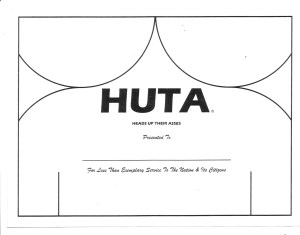
The image above is designed for use in congratulating the current administration and Congress among other for their poor representation of their constituents and workers. This image is given freely except for acknowledgement of the creator (Michael1942) when used.


The two (2) year slog of this administration to do the bidding of uninformed leader is beginning to wear on all of us who are paying attention beyond the rhetoric. Oddly enough that same wear is showing on the perpetrator of these flawed policies especially since he can’t run away or hide from them as he has done in his business life.  There is more to consider beyond personal beliefs and friendships. In a ship with many rats there is no escaping the inevitable turning on one another and desertion. The current issue (disaster?) is still the so called “witch hunt” aka the “Mueller Investigation”. In thinking about the lead up to this (mis) administration is the dissatisfaction by the voters  with the Congressional neer do wells who (we) they have elected on an ongoing basis. The fault for this poor administration started when Congress failed us by becoming extremely partisan to the extent of being at war with one another This war was fueled by the huge amounts of money allowed to be infused by the “citizens United” decision which removed all restraints on the amounts Corporations could donate to campaigns. This decision by our Supreme court in a partisan vote has allowed the rise of Trump and the re election of the worst representatives we have had in decades. It is bad enough that our “Representatives” years ago enacted a law that gives them a cost of living adjustment with no public scrutiny, they are also responsible for the U.S.Post office seeming to be insolvent but that appearance  is due to a law by Congress which mandated. The piece below explains the Post Office mess

“Congress, Not Amazon, Messed Up the Post Office
Legislators passed a law that made the USPS less competitive with the private sector.
By Barry Ritholtz
‎April‎ ‎4‎, ‎2018‎ ‎12‎:‎38‎ ‎PM‎ ‎CDT Corrected ‎April‎ ‎6‎, ‎2018‎ ‎2‎:‎59‎ ‎PM‎ ‎CDT
Before the news cycle gets consumed by the U.S.-China trade war in the making, let’s go back to something I find much more intriguing: the U.S. Postal Service. Specifically, is Amazon.com Inc.’s contract with the USPS kosher, or is it a sweetheart deal that amounts to a government giveaway?
Let’s get one thing out of the way up front: President Donald Trump’s endless grousing about Amazon is nothing more than a thinly disguised complaint about the Washington Post, which has done a fine job reporting on his administration, revealing its many warts and ethical lapses. He has made no secret of his hostility, as a brief review of his Twitter posts would show.
But let’s set that aside and try to answer whether the USPS provides an unfair subsidy to Amazon. To better understand these claims requires a fuller understanding about the Post Office.
Let’s start with the USPS mandate: It was formed with a very different directive than its private-sector competitors, such as FedEx Corp. and United Parcel Service Inc. Those two giant private shippers, along with a bevy of smaller ones, are for-profit companies that can charge whatever they believe the market will bear. The USPS, by contrast, is charged with delivering to every home and business in America, no matter how remote. And, they can only charge what Congress allows; increases require approval. It also has congressional pressure and oversight on where it must maintain postal offices. The USPS has been slowly closing sites where there is insufficient customer demand. But closing an obsolete or little-used facility invariably entails a battle with each representative, who in turn faces voter anger when the local post office is targeted for closing. FedEx or UPS can open or close locations with little problem as demand and package traffic dictate.
Then there is the Postal Accountability and Enhancement Act of 2006 (PAEA), which some have taken to calling “the most insane law” ever passed by Congress. The law requires the Postal Service, which receives no taxpayer subsidies, to prefund its retirees’ health benefits up to the year 2056. This is a $5 billion per year cost; it is a requirement that no other entity, private or public, has to make. If that doesn’t meet the definition of insanity, I don’t know what does. Without this obligation, the Post Office actually turns a profit. Some have called this a “manufactured crisis.” It’s also significant that lots of companies benefit from a burden that makes the USPS less competitive; these same companies might also would benefit from full USPS privatization, a goal that has been pushed by several conservative think tanks for years.
Paying retiree obligations isn’t the issue here; rather, being singled out as the only company with a congressional requirement to fully fund those obligations is. It puts the USPS at a huge competitive disadvantage. Yes, a retirement crisis is brewing; most private-sector pensions are wildly underfunded. But the solution is to mandate that ALL companies cover a higher percentage of their future obligations — not just one entity.
What about lobbying Congress for changes to these rules? Unlike private-sector entities, the Postal Service is barred from lobbying. Similar restrictions do not apply to FedEx or UPS or other carriers.
Perhaps it helps to think of the USPS as two separate entities co-existing together: On one side is the congressionally mandated operation that delivers letters everywhere in the country. This is the side that helped knit together the far-flung cities, towns and settlements that defined the U.S. at the time of the nation’s founding. The modern innovations of email, texts and the internet helped turn this into a money-losing business.
The other side of the USPS is the parcel-delivery service, which is profitable. It both competes with, and provides services to, private-sector delivery businesses.
Indeed, both UPS and FedEx contract with USPS to perform so-called last-mile delivery for their rural and most-expensive routes. They leverage the existing infrastructure of USPS to provide services for their client base without having to build that same costly last-mile infrastructure for letters and parcels. Effectively, they arbitrage what would otherwise be low-margin or unprofitable deliveries.
The problem for the USPS isn’t the packages from the likes of Amazon, but rather, the rest of the Post Office’s mandate. In its annual report, the USPS noted that 2017 saw “mail volumes declined by approximately 5.0 billion pieces, or 3.6 percent, while package volumes grew by 589 million pieces, or 11.4 percent.” Amazon and other internet retailers are a source of profitable deliveries for the post office; the relationship is in no way a subsidy for the retailers. Incidentally, the PAEA bars the Post Office from pricing parcel delivery below-cost.
Pricing, locations, hiring, funding? The Post Office has broad limitations about making routine business decisions that its private-sector competitors do not.
Trump has raised a valid issue in pointing out the unfair conditions under which the USPS operates. He is looking, however, at the wrong side of the problem.”
(Corrects fifth paragraph of article published April 4 to delete inaccurate reference to 75-year retiree benefit funding obligation.)
This column does not necessarily reflect the opinion of the editorial board or Bloomberg LP and its owners.
To contact the author of this story:
Barry Ritholtz at britholtz3@bloomberg.net
To contact the editor responsible for this story:
James Greiff at jgreiff@bloomberg.net
Barry Ritholtz is a Bloomberg Opinion columnist. He founded Ritholtz Wealth Management and was chief executive and director of equity research at FusionIQ, a quantitative research firm. He is the author of “Bailout Nation.”

Please donate


Currently our National state is infected with a division fueled by racism, ignorance and nationalism not seen in decades. To some of us these contributing factors have always been there in some form but with the arrival of TOTUS they have become mainstream. Out political parties have divided in such a way as to put our way of life in jeopardy due to the maintenance of neer do wells in the Congress. TOTUS did not create these events alone as he is merely a means to an end and a cover for their personal agendas. It is unfortunate that the phrase “Honest Politician” is more of an oxymoron than ever but it is truer than ever. The correction is apparent and that does not mean impeachment as that is a fight that is time consuming and impractical. If the “true” representatives of the people want to get back on track then the direction is forward  with proper legislation and continuing investigation of improprieties that affect us all. The squeaky wheel gets the grease but doesn’t move us ahead any faster. Correction involves a joint effort by  voters and their representatives with no lip service (promises that will be broken (lies). This administration will not change as it takes information to do so and this administration along with its advisors is woefully underinformed. It is now up to the “newly” elected members of Congress to don the mantle of rationality mixed with the wisdom of the existing members to move us toward a “TOTUS” correction now and post TOTUS.

btn_donateCC_LG

Please Donate


By Shawn Donnan, Andrew Mayeda, Jenny Leonard and Jeremy C.F. Lin
‎October‎ ‎2‎, ‎2018
The U.S., Canada and Mexico reached a deal on a successor to the 24-year-old Nafta, capping more than 13 months of negotiations and overcoming major sticking points from Canadian dairy market access to minimum wage requirements for automobile production. Here are the major differences between the old deal and the new one, called the U.S.-Mexico-Canada Agreement, or USMCA, which President Donald Trump hailed Monday as a historic achievement.
U.S.-Mexico-Canada Agreement North American Free Trade Agreement
Cars The new deal increases the portion of a car that needs to be produced in North America to 75 percent to avoid tariffs. It also requires at least 40 percent of that come from factories where the average wage is $16/hour. The current Nafta, which came into force in 1994, requires that 62.5 percent of cars produced in the trade zone be made in North America. There’s no minimum-wage requirement.
Dairy U.S. dairy farmers will be allowed to sell more milk to Canada. Dairy wasn’t part of the original deal. The U.S. has long complained that Canada’s system of domestic quotas protects its dairy farmers from foreign competition.
Disputes The new deal severely restricts chapter 11 between the U.S. and Mexico, while eliminating it between the U.S. and Canada. Chapter 19 and 20 both survived, virtually intact. Nafta has three kinds of dispute settlement systems. Chapter 11 provides a mechanism for solving disputes between companies and Nafta governments. Chapter 19 allows for cross-border mediation when Nafta partners clash over dumping or subsidy cases. Chapter 20 governs disputes between states.
Currency The new deal includes a new currency chapter that commits the three countries to maintain market-determined exchange rates and refrain from competitive devaluations of their currencies. The pledge won’t have much effect on policymaking in the three nations, all of which have free-floating exchange rates. But it could serve as a template for future trade deals, giving the U.S. leverage over countries such as China. The current Nafta doesn’t include a currency chapter. Automakers and some lawmakers have been calling for one as a way to shield against currency manipulation.
Sunset Clause The U.S. had demanded a sunset clause that would kill Nafta after five years unless the countries agreed to extend it. In the end, the countries settled on a 16-year term for the deal, with a review to identify and fix problems and a chance of a deal extension after six years. There is no automatic sunset clause under the current Nafta. But any of the three partners can withdraw from the agreement on six months’ notice.

btn_donateCC_LG

Please Donate